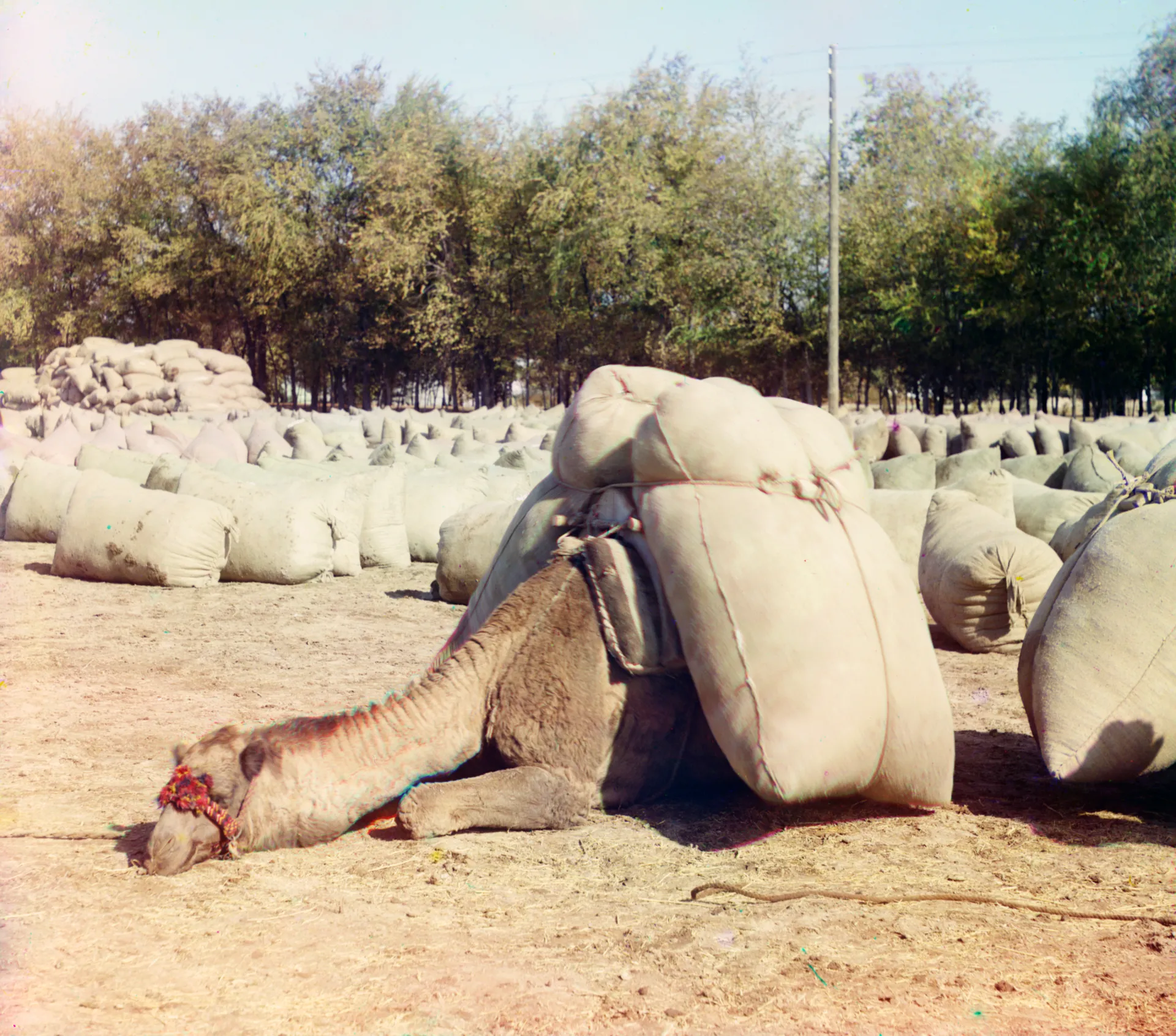
This land has been inhabited, contested and rebuilt without interruption for more than two and a half thousand years. Almost every empire that mattered in Eurasia passed through it — and most of them left something behind.
Prehistory
In 1938 the archaeologist Alexey Okladnikov found, in the Teshik-Tash cave in the Boysun mountains, the skull of a Neanderthal child of eight to eleven — around 70,000 years old.
Much later, in the first millennium BC, Iranian-speaking nomads arrived from the northern grasslands of what is now Kazakhstan. They settled along the rivers of Central Asia, dug extensive irrigation networks and built cities such as Bukhara and Samarkand. Sitting on the route between China and Europe, these towns grew extremely wealthy and became centres of government and culture.
Early history and the Silk Road
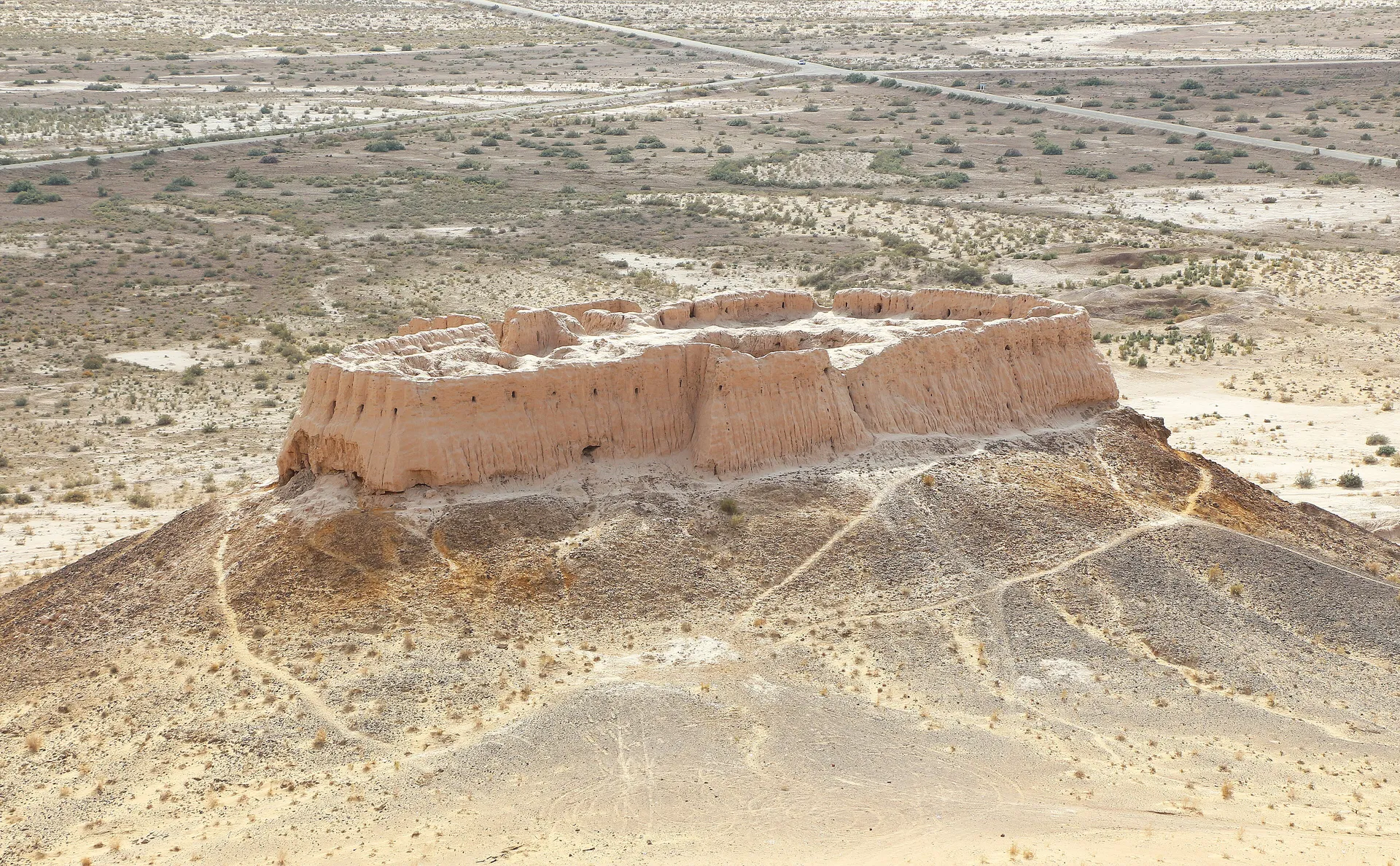
By the 5th century BC the Bactrian, Sogdian and Tokharian states dominated the region. As China began to develop its silk trade with the West, the Iranian cities of Central Asia took advantage of it by becoming centres of commerce. Through a dense network of towns in Transoxiana — later called Mawarannahr, after the Arab conquest — Sogdian middlemen became the wealthiest of these merchants. Thanks to the trade on what became known as the Silk Road, Bukhara and Samarkand grew rich, and at times Transoxiana was one of the most influential provinces of the ancient Persian world.
Alexander the Great conquered the region in 328 BC, bringing it briefly under his Macedonian empire. Its wealth was a constant magnet for invaders from the northern steppes and from China. The Sogdian states fought many wars with their neighbours, and Persia and China often clashed over the region. The Chinese in particular wanted the famous “heavenly horses” of the Fergana Valley, and in 104 BC even went to war against Dayuan, as they called Fergana, to obtain them.
In the same centuries the region was an important centre of intellectual and religious life. Until the first centuries AD the dominant religion was Zoroastrianism, but Buddhism, Manichaeism and Christianity also drew large numbers of followers.
Buddhism in the region
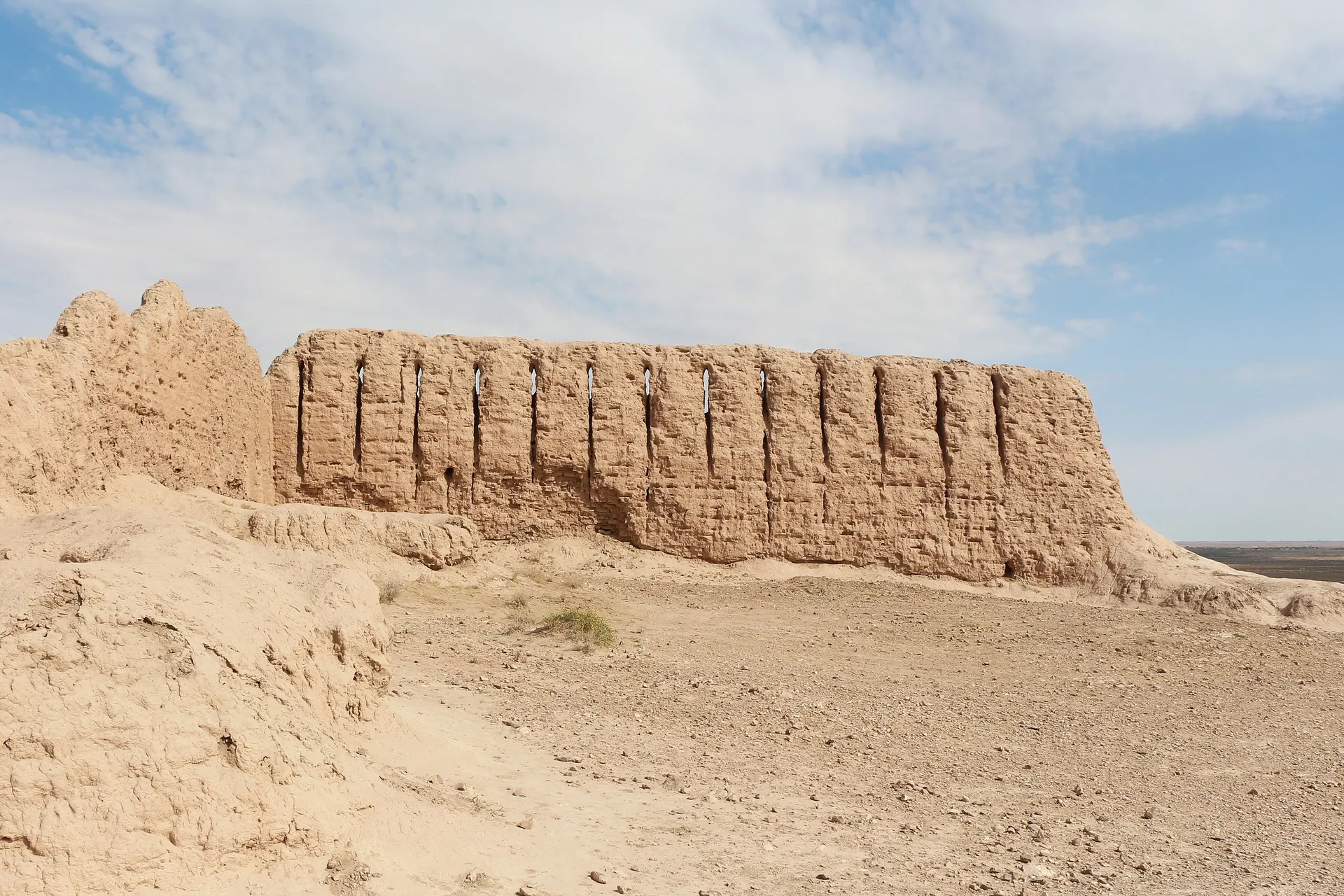
Traces of Buddhism have been found across Central Asia, and many Buddhist sites are concentrated around Termez, once the northern capital of ancient Bactria. The main source of the Buddhist culture that later reached China and Japan was the Greco-Buddhist art of Gandhara — today's northern Pakistan and Afghanistan — which flourished from about the 1st century BC to the 4th century AD.
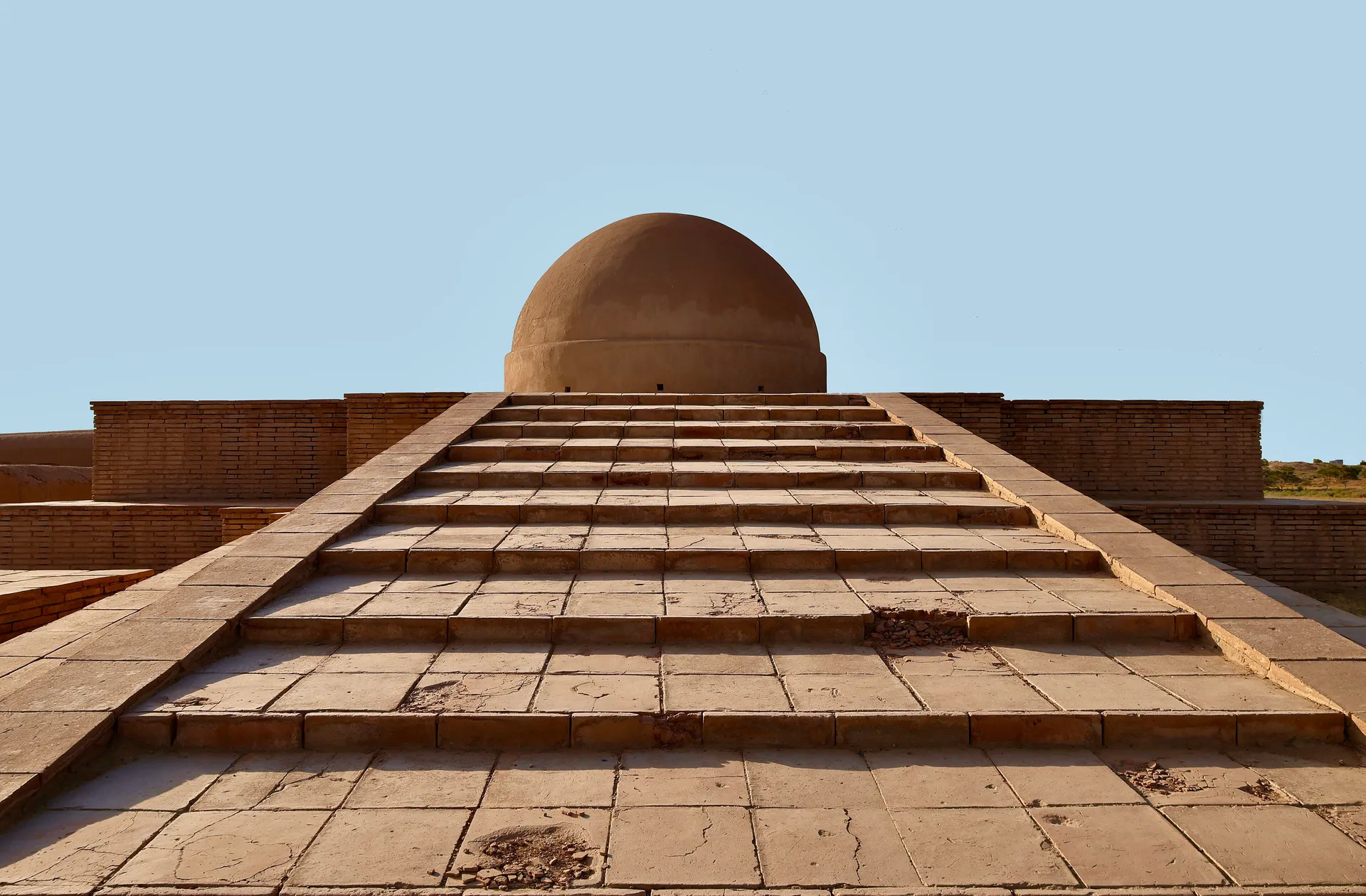
From there the religion travelled along the trade routes to Parthia, Bactria and on to Sogdiana, in the heart of today's Uzbekistan. In the 7th century it continued north into southern Kazakhstan and northern Kyrgyzstan. The monasteries of Kara Tepe and Fayaz Tepe near Termez, with their stupas and sculptures, are among the best-preserved witnesses of that time.
The Turkic Khaganate
Between 563 and 567 the territory of modern Uzbekistan became part of the Turkic Khaganate. In 630 and 658 the Eastern and Western Turkic Khaganates were defeated by China's Tang dynasty.
Under the Western Turkic Khaganate (603–658) Turkic political influence in Sogdiana grew. Turks settled in the oases, developed the ancient Turkic script, and some rulers of Bukhara, Chach (Tashkent) and Fergana issued their own coins. Some of the Turks of Bukhara adopted Christianity, others Buddhism or Zoroastrianism, but most kept their traditional beliefs — worshipping Tengri, the sky god; Umay, the mother goddess; Yer-sub, the spirit of earth and water; and Erklig, lord of the underworld.
The early Islamic period
The Arab conquest of Central Asia, completed in the 8th century, brought the religion that remains dominant today. Arab armies first entered Transoxiana in the middle of the 7th century. Divided and without strong leadership, the Sogdians and other Iranian peoples could not hold out for long against forces led by the general Qutayba ibn Muslim. Islam spread gradually, and the region's future as part of the Islamic world was settled by the Arab victory over a Chinese army at the Battle of Talas in 751.
Direct Arab rule was relatively brief, and Central Asia kept much of its Iranian character as a centre of culture and trade. At the height of the Abbasid Caliphate, in the 8th and 9th centuries, Transoxiana lived through a true golden age. Bukhara became one of the leading centres of learning, culture and art in the Muslim world, rivalling Baghdad, Cairo and Córdoba. Some of the greatest scholars in Islamic history came from this region — among them al-Bukhari, al-Tirmidhi, al-Khwarizmi, al-Biruni and Avicenna — and Omar Khayyam also worked for a time in Samarkand and Bukhara.
As the Abbasid Caliphate weakened, local Iranian dynasties took over. Under the Samanids the rich Perso-Islamic culture of Transoxiana continued to flourish, with Persian as the main language of literature and government.
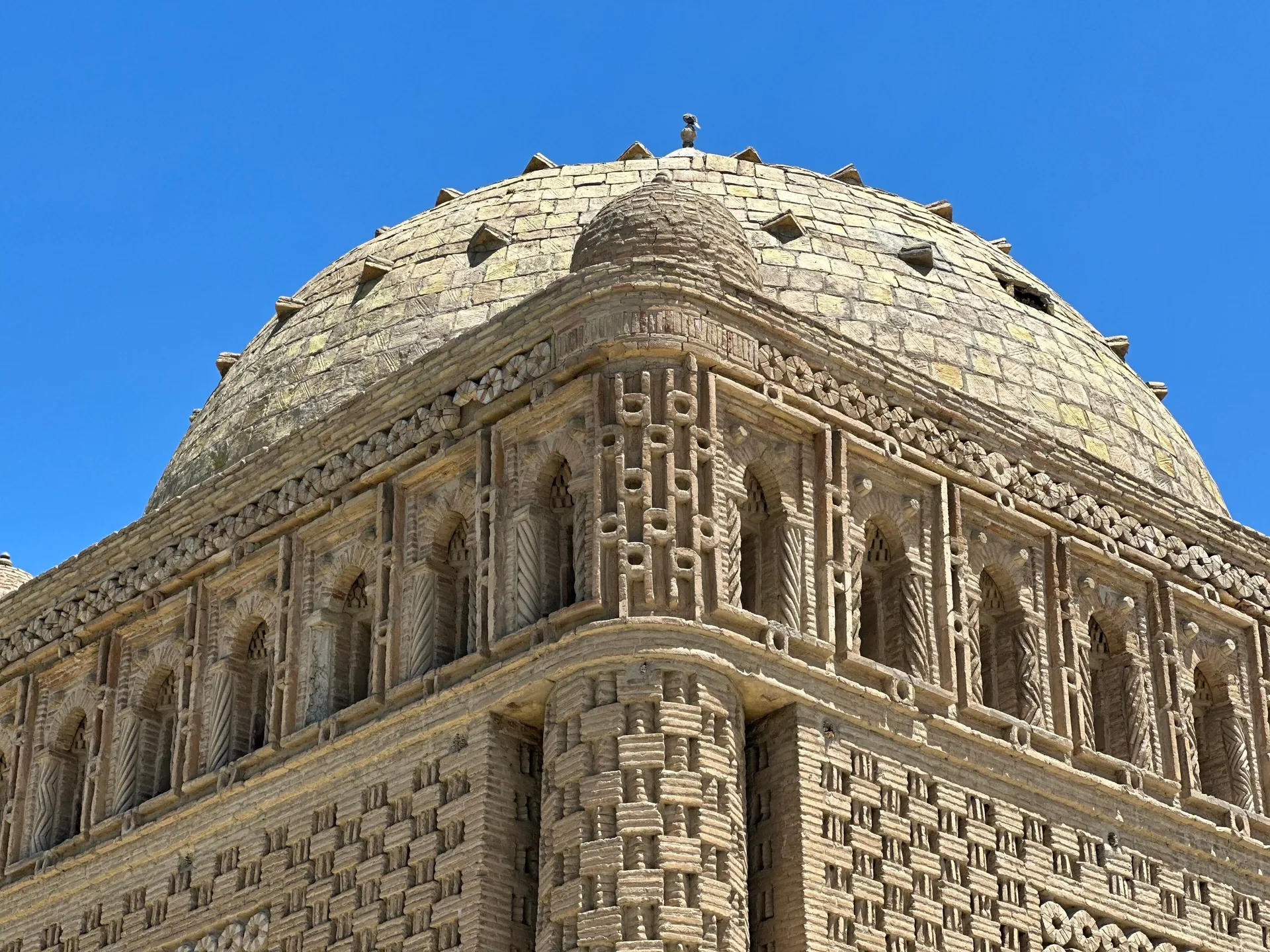
Ghaznavids, Karakhanids and later dynasties
From the 6th century onwards, Turkic nomads kept moving into Central Asia from the northern steppes, and many joined the Samanid armies as soldiers. In the late 10th century, as the Samanids lost control, some of these Turkic commanders rose to power and founded states of their own.
The first major Turkic state was the Ghaznavid Empire, founded at the end of the 10th century. It was soon followed by the Karakhanids, who took Bukhara in 999 and ruled Transoxiana for the next two centuries, with Samarkand as the capital of their western state. The Seljuks later defeated both the Ghaznavids and the Karakhanids, turning the latter into vassals.
In the late 12th century a Turkic dynasty from Khwarezm — the Khwarezmshahs — united Khwarezm, Transoxiana and much of Iran. Under rulers such as Qutb ad-Din Muhammad and Muhammad II the region stayed prosperous and kept its Perso-Islamic identity.
The Mongol invasion and the Timurid era
In 1219–1221 the Mongol armies of Genghis Khan invaded and devastated the region. Bukhara, Samarkand and Urgench were sacked, and many Iranian-speaking communities were driven from their homes.
A century and a half later, under Timur (Tamerlane), Transoxiana lived through its last great cultural flowering: the Timurid Renaissance, centred on Samarkand. Timur and his heirs raised the monuments that still define the city's skyline, and his grandson Ulugbek made it a capital of astronomy. After Timur's death in 1405 his state gradually broke apart, and by 1510 Uzbek tribes led by the Shaybanids had conquered the whole of Transoxiana.
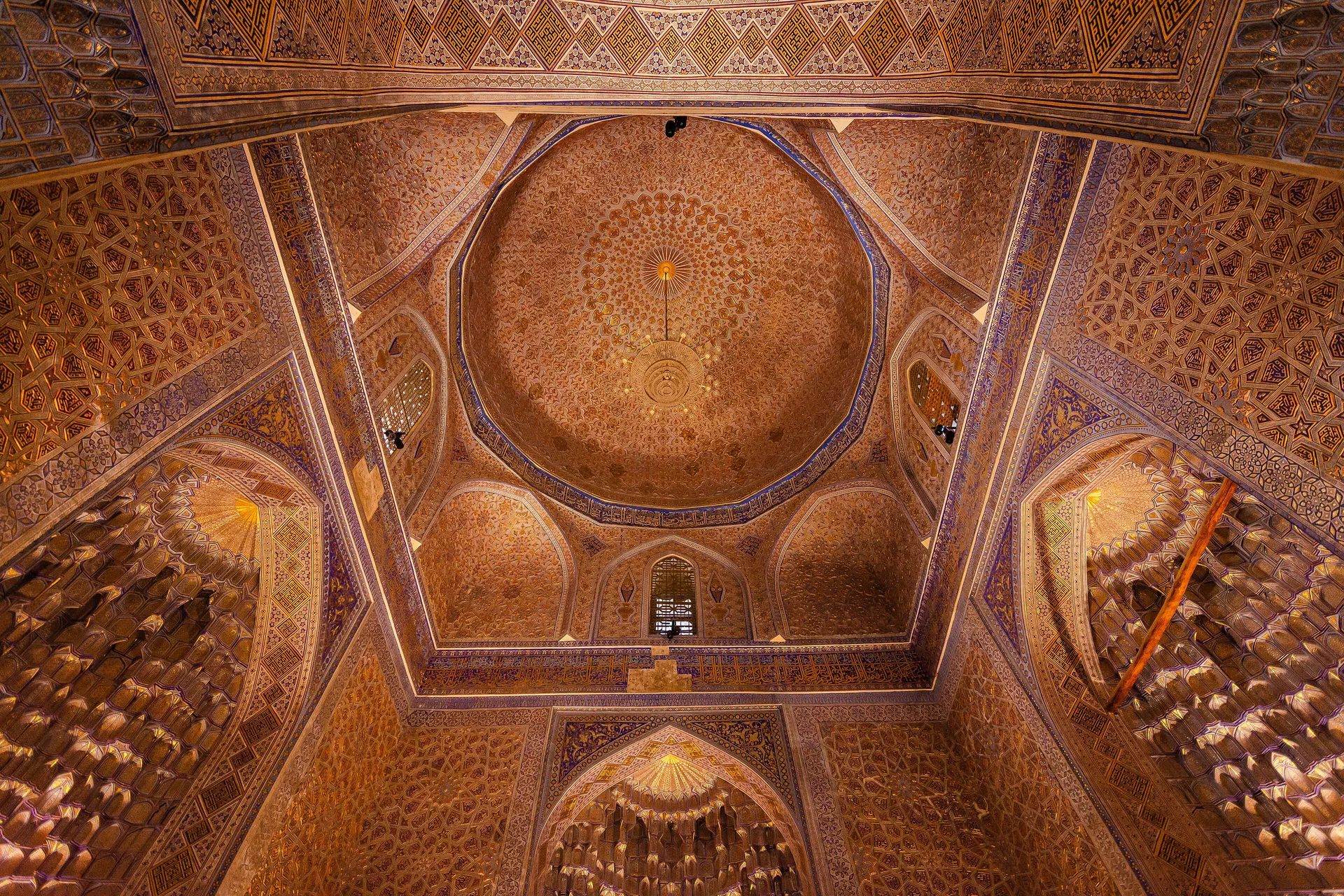
Khanates, colony, republic
By the 18th century the region had settled into three rival states: the Emirate of Bukhara, the Khanate of Khiva and the Khanate of Kokand. The Russian Empire took them one by one — Tashkent in 1865, Samarkand in 1868, Khiva in 1873, Kokand annexed in 1876 — and governed the whole as Turkestan. Cotton replaced much of the food crop, a decision whose consequences reached the Aral Sea a century later. In 1924 Soviet border-drawing produced the Uzbek SSR, roughly the shape of the country today. Independence was declared on 31 August 1991 and is celebrated every 1 September.