Architecture & Cities
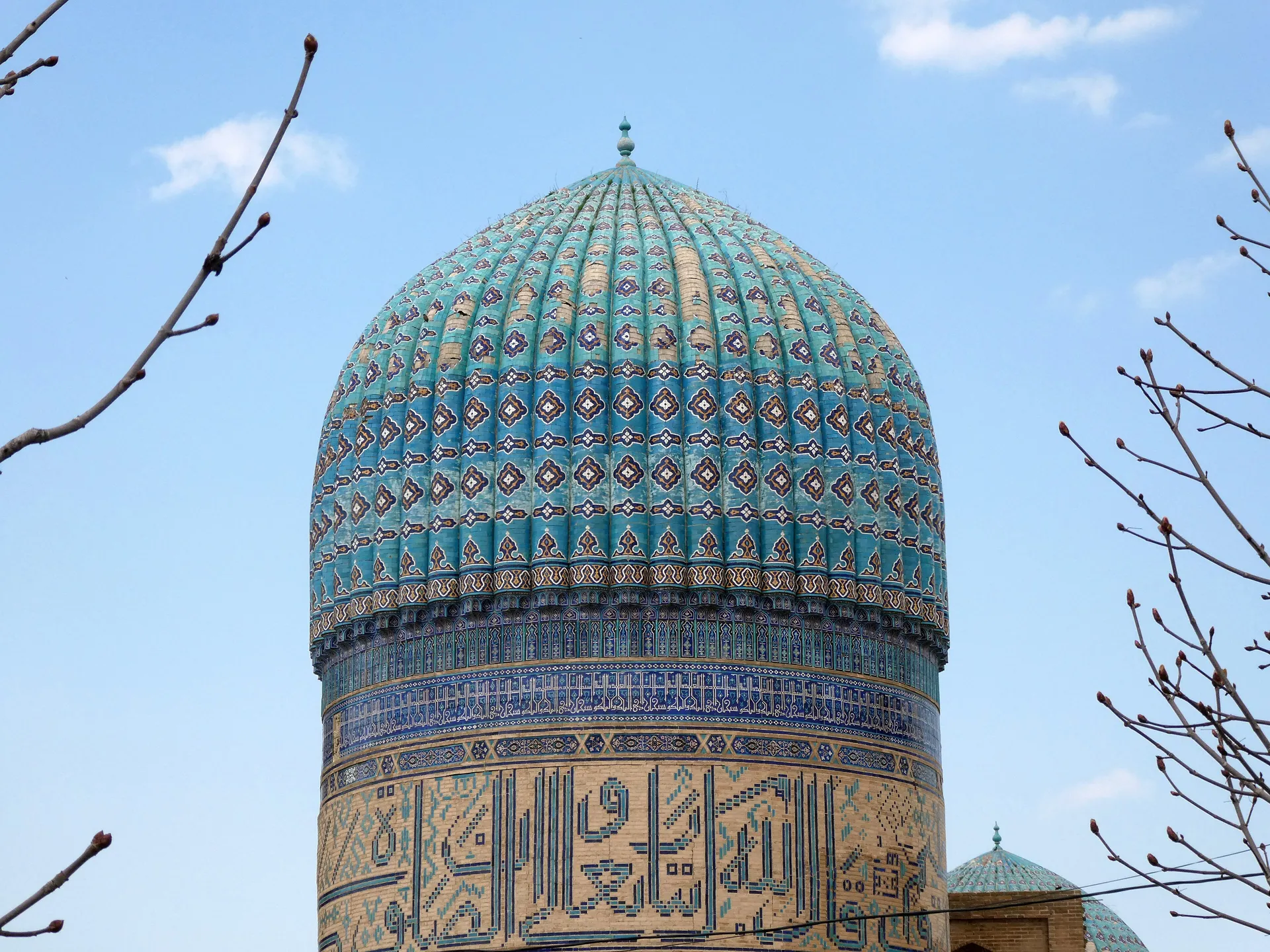
Why the domes are that particular blue
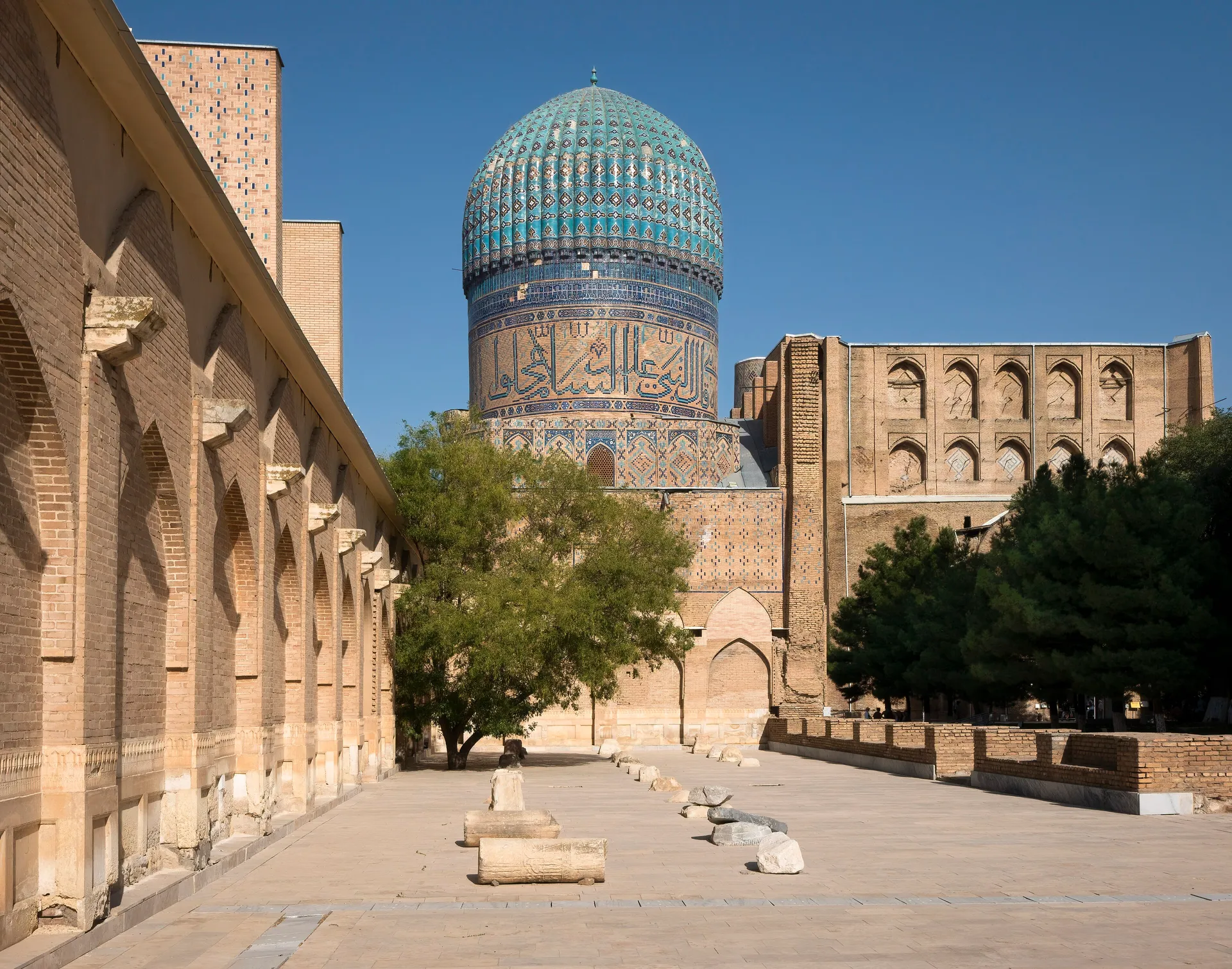
Timurid builders worked in baked brick — a material that is structurally excellent and visually plain. Everything that makes these buildings famous is the skin they wrapped around it.
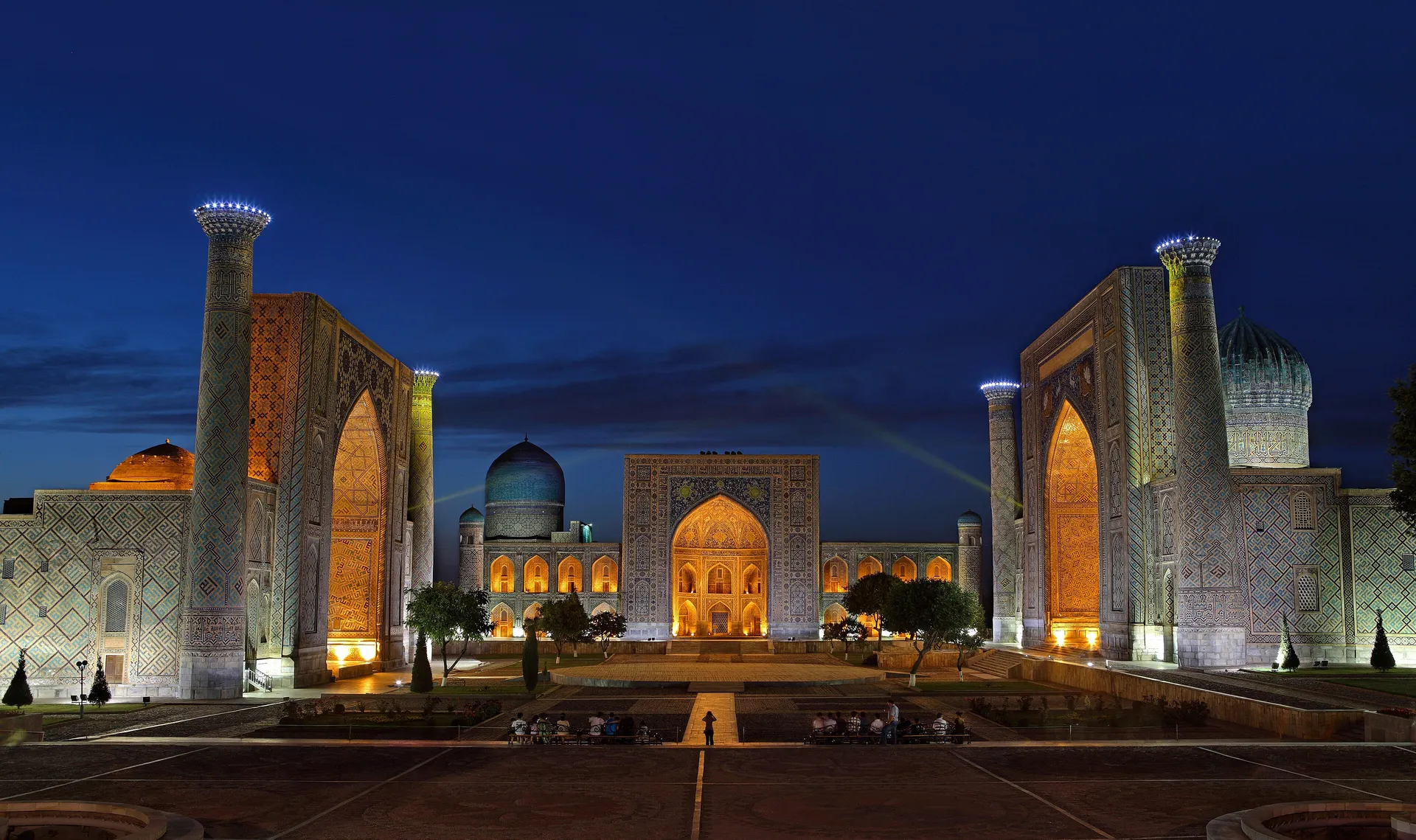
The Registan at night
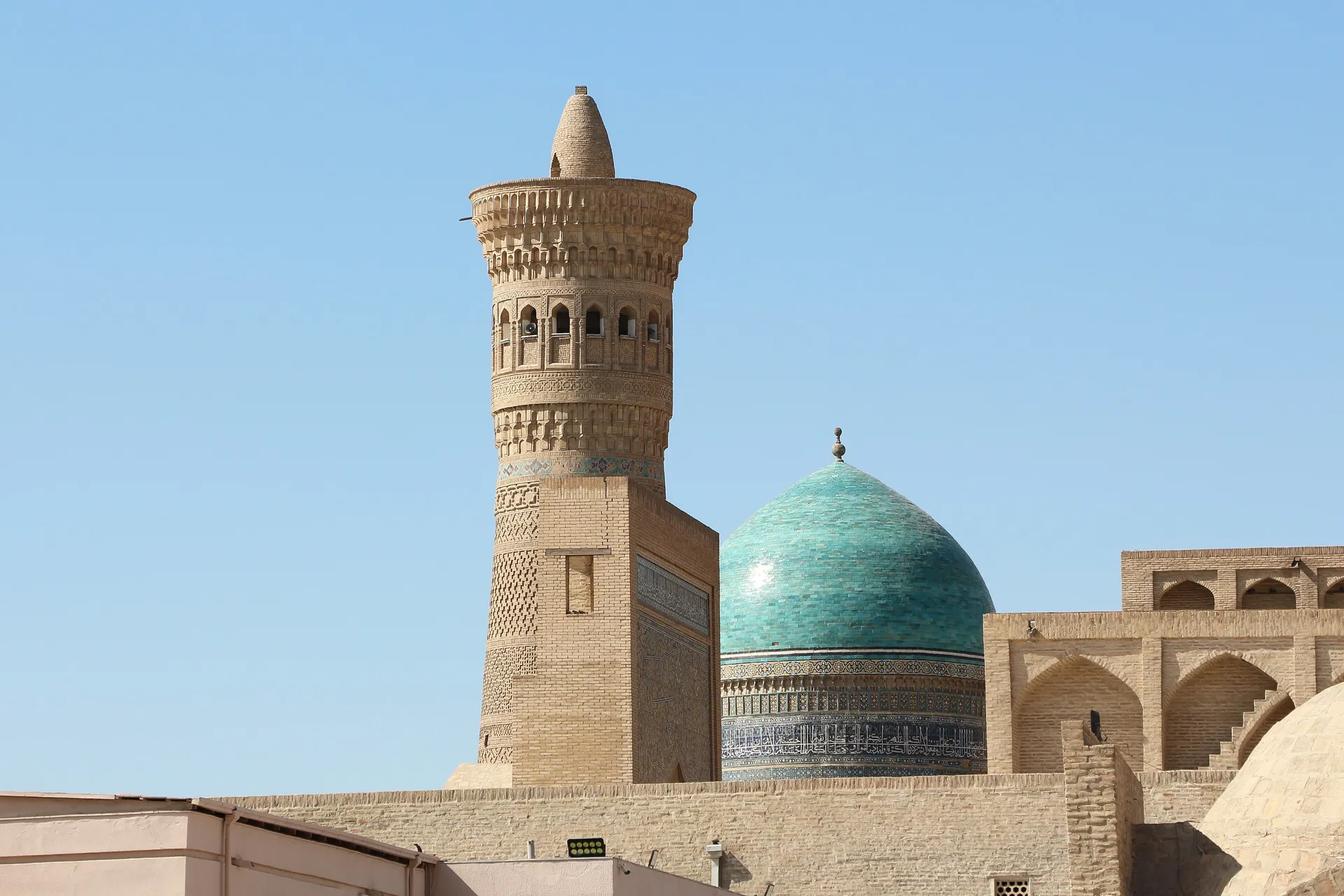
Where Uzbek architecture comes from
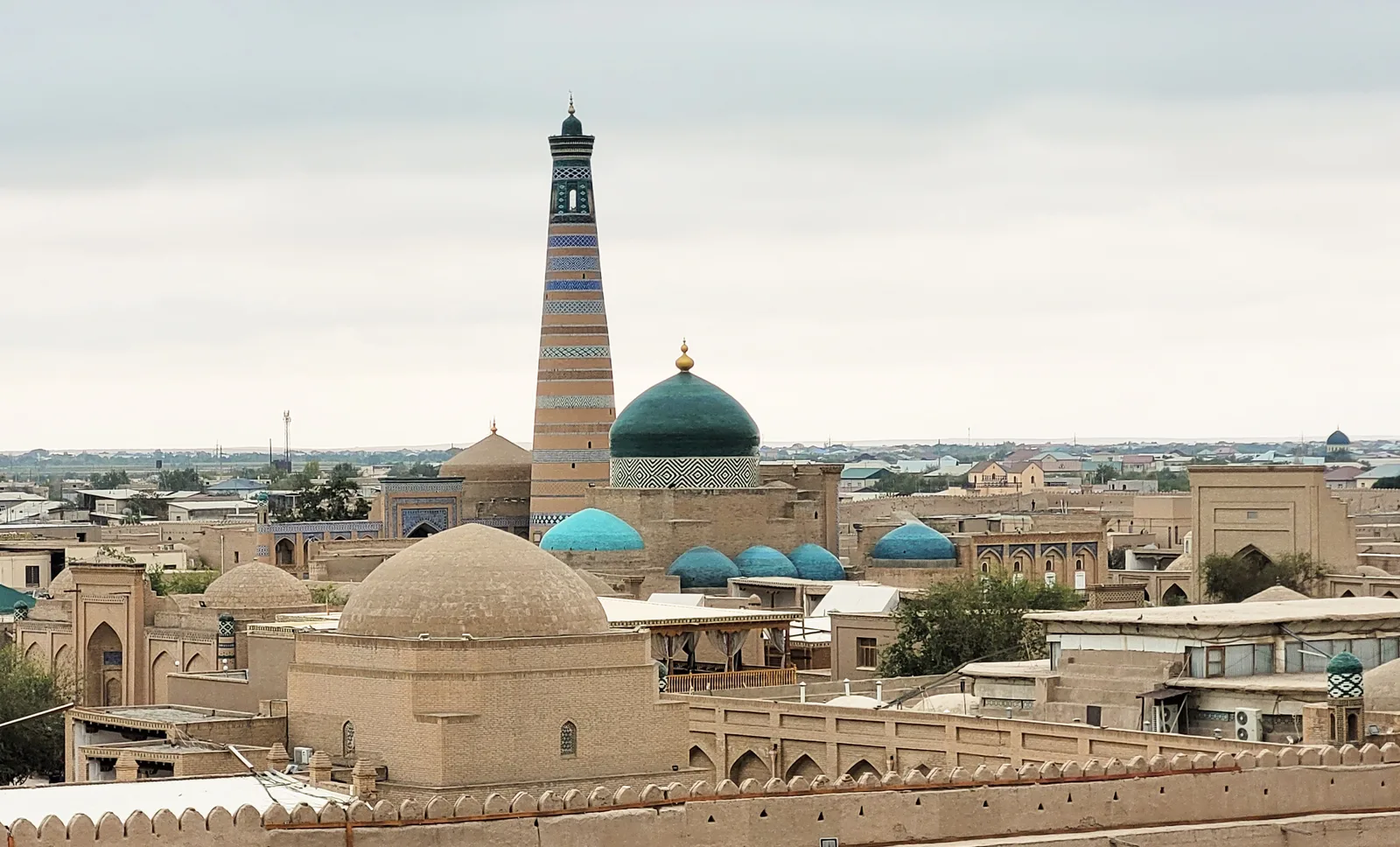
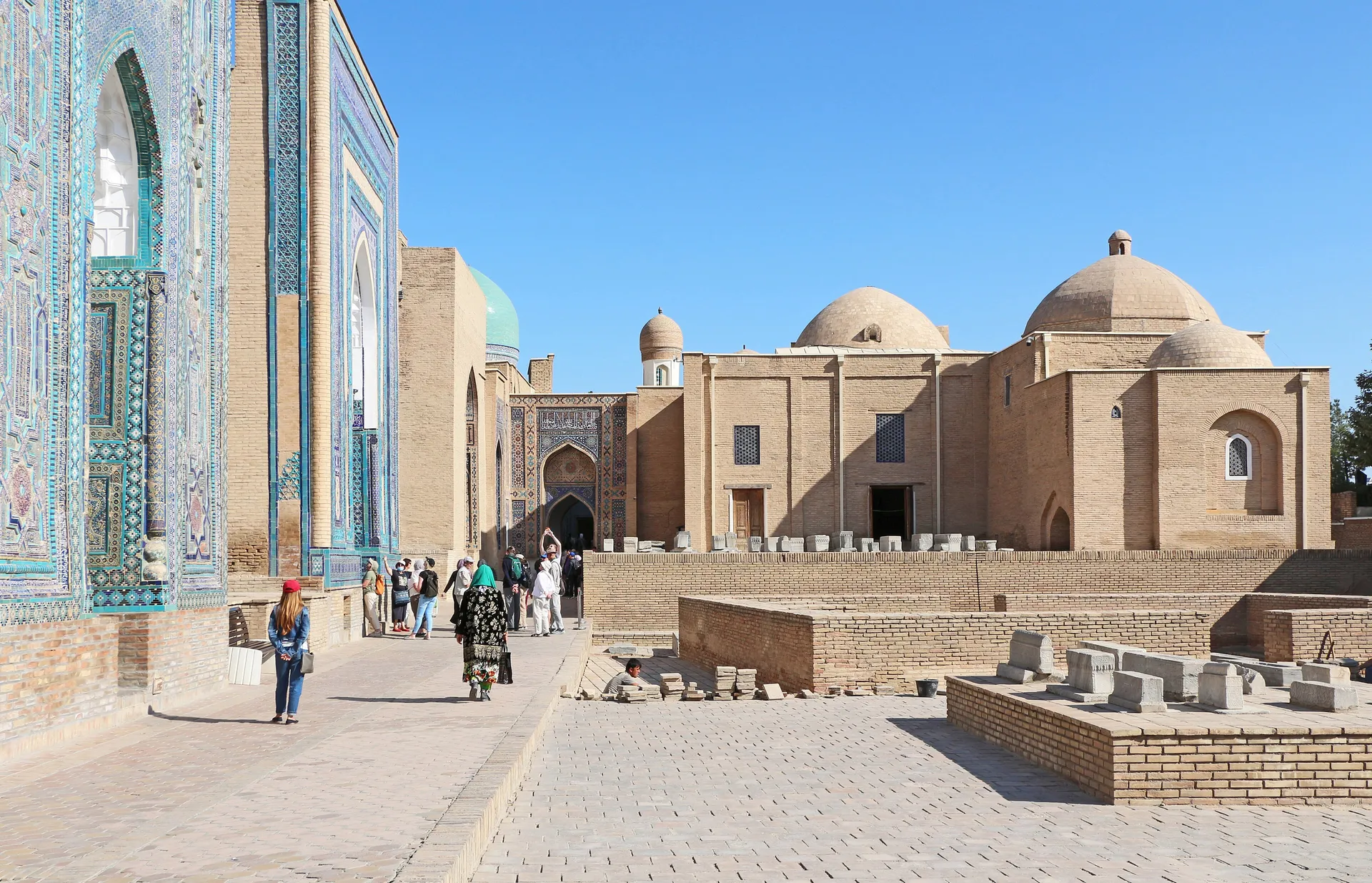
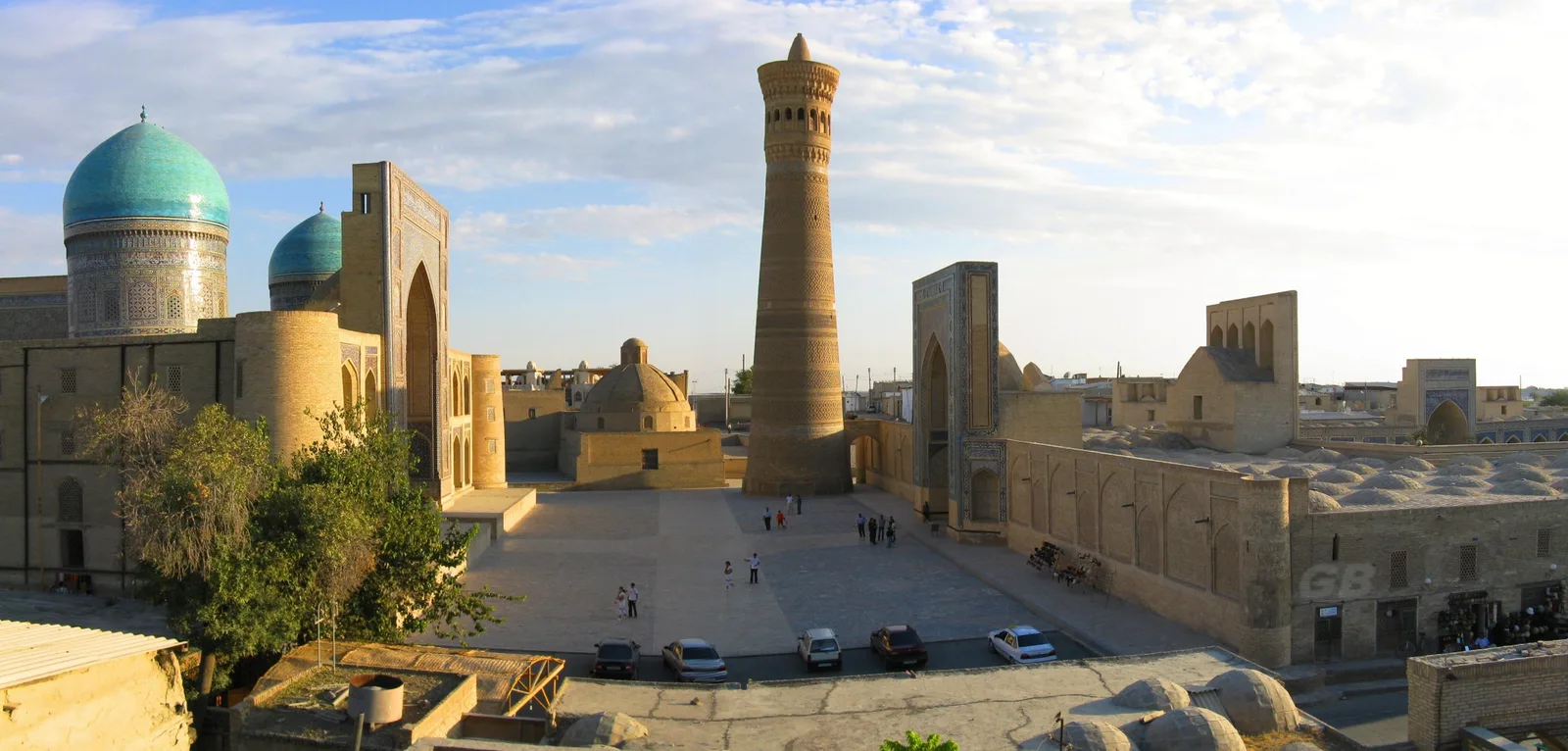
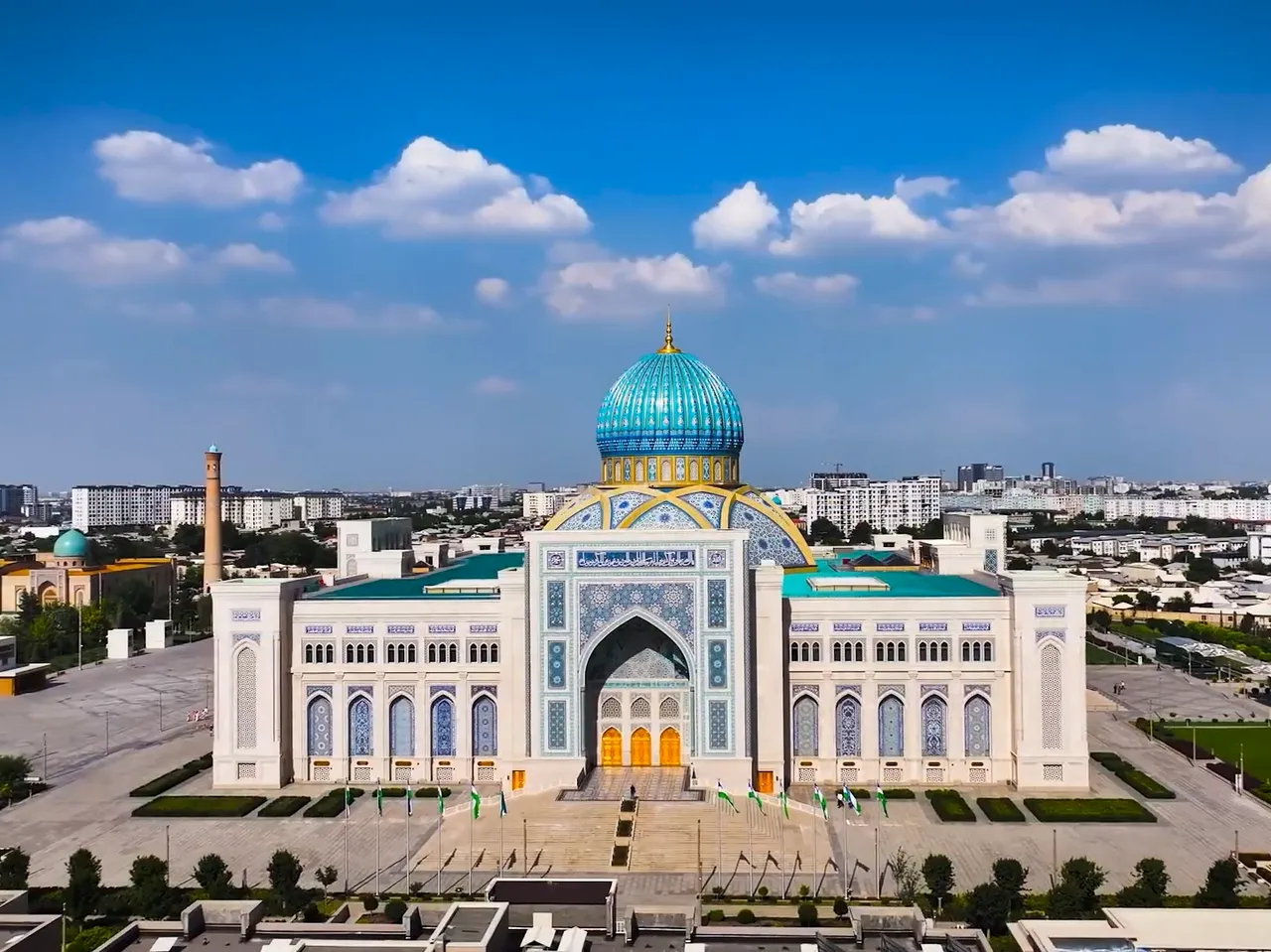
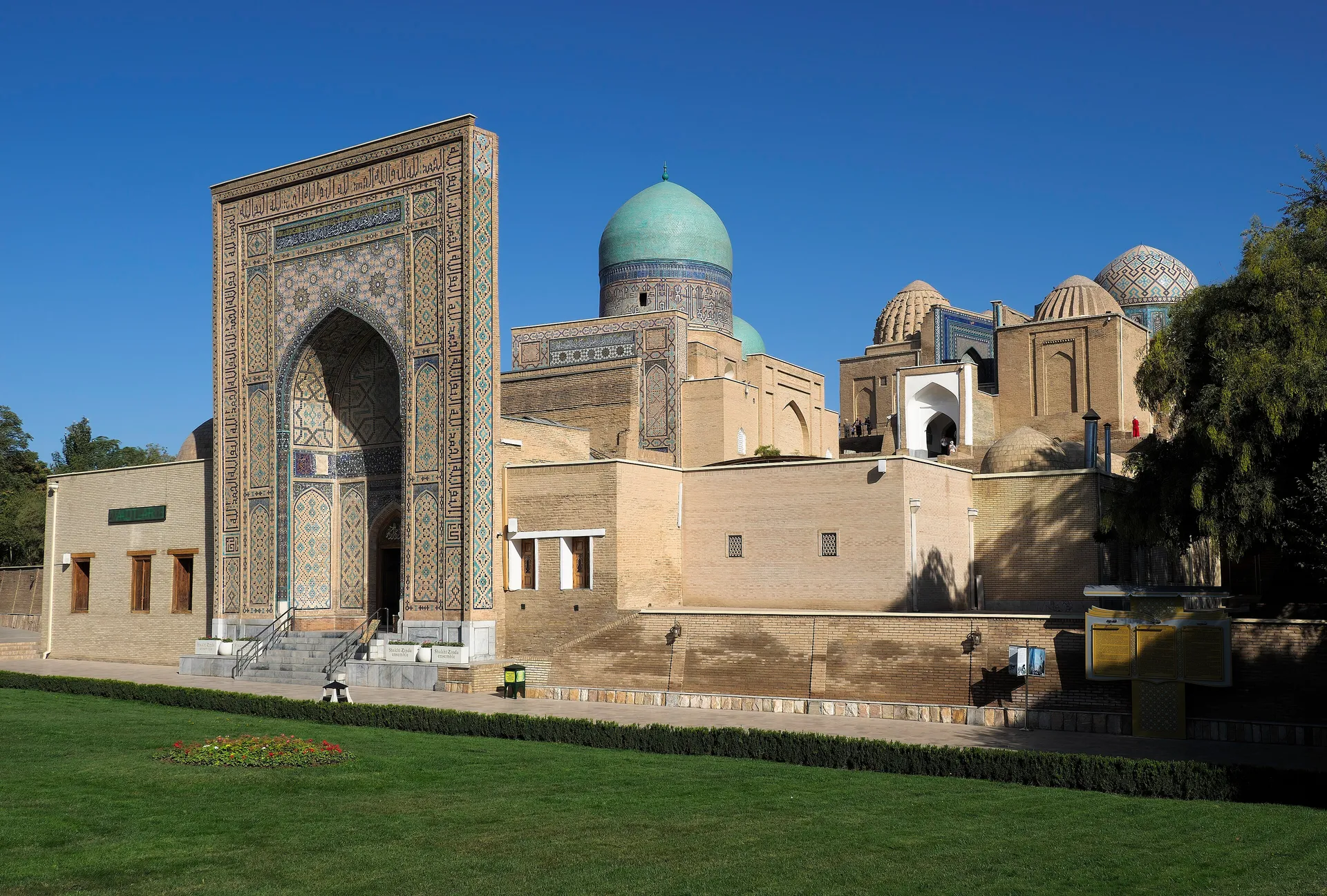
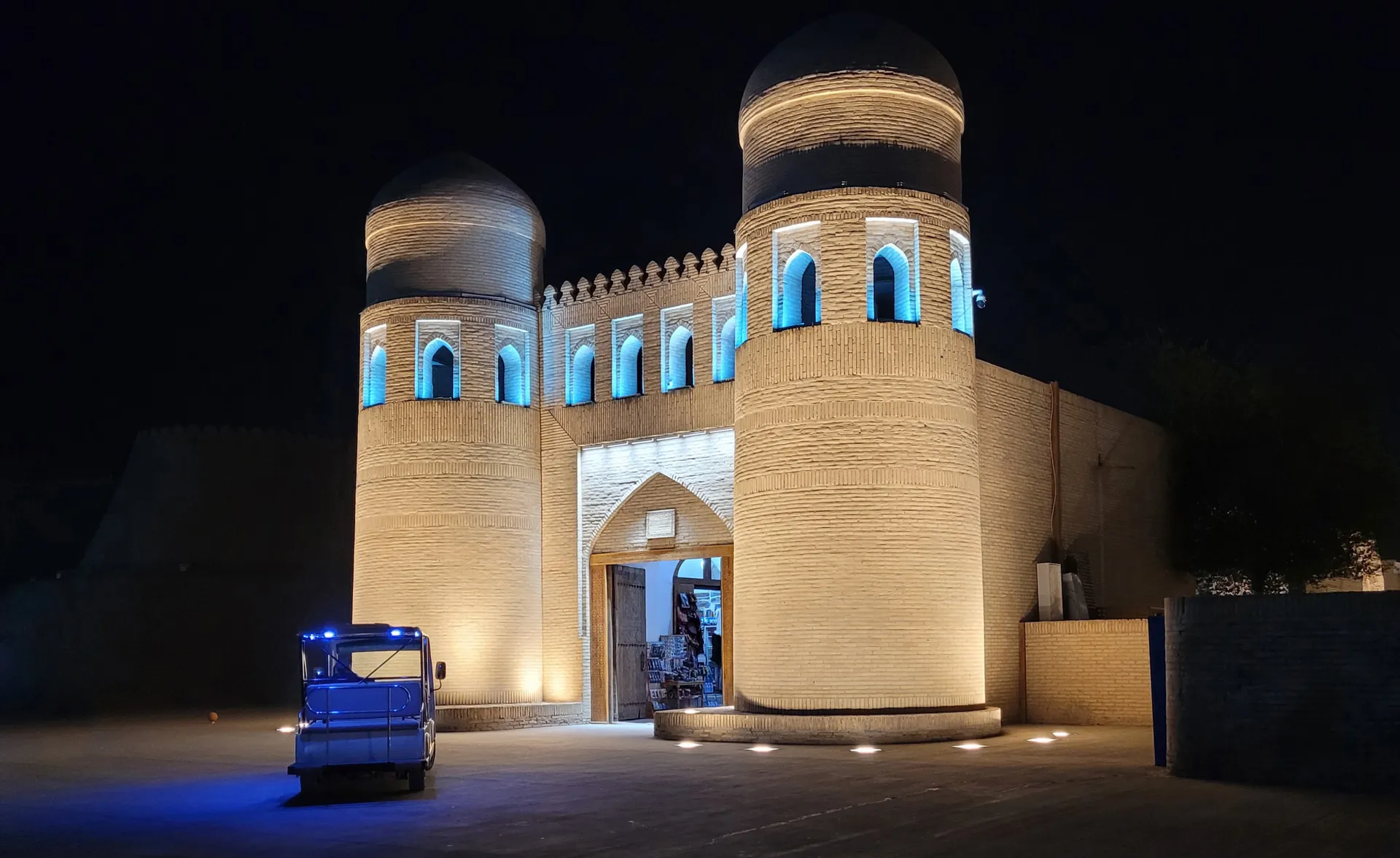
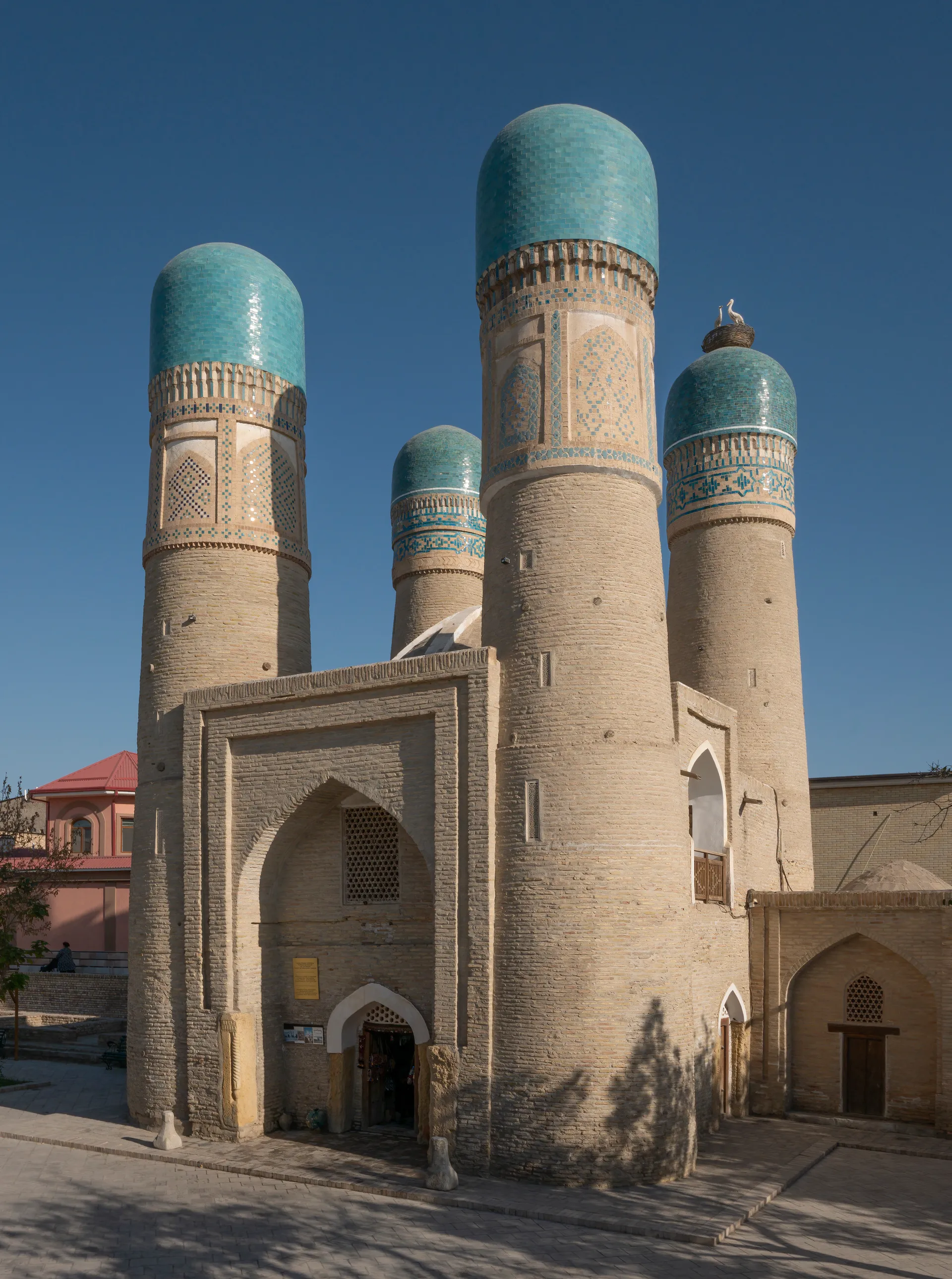
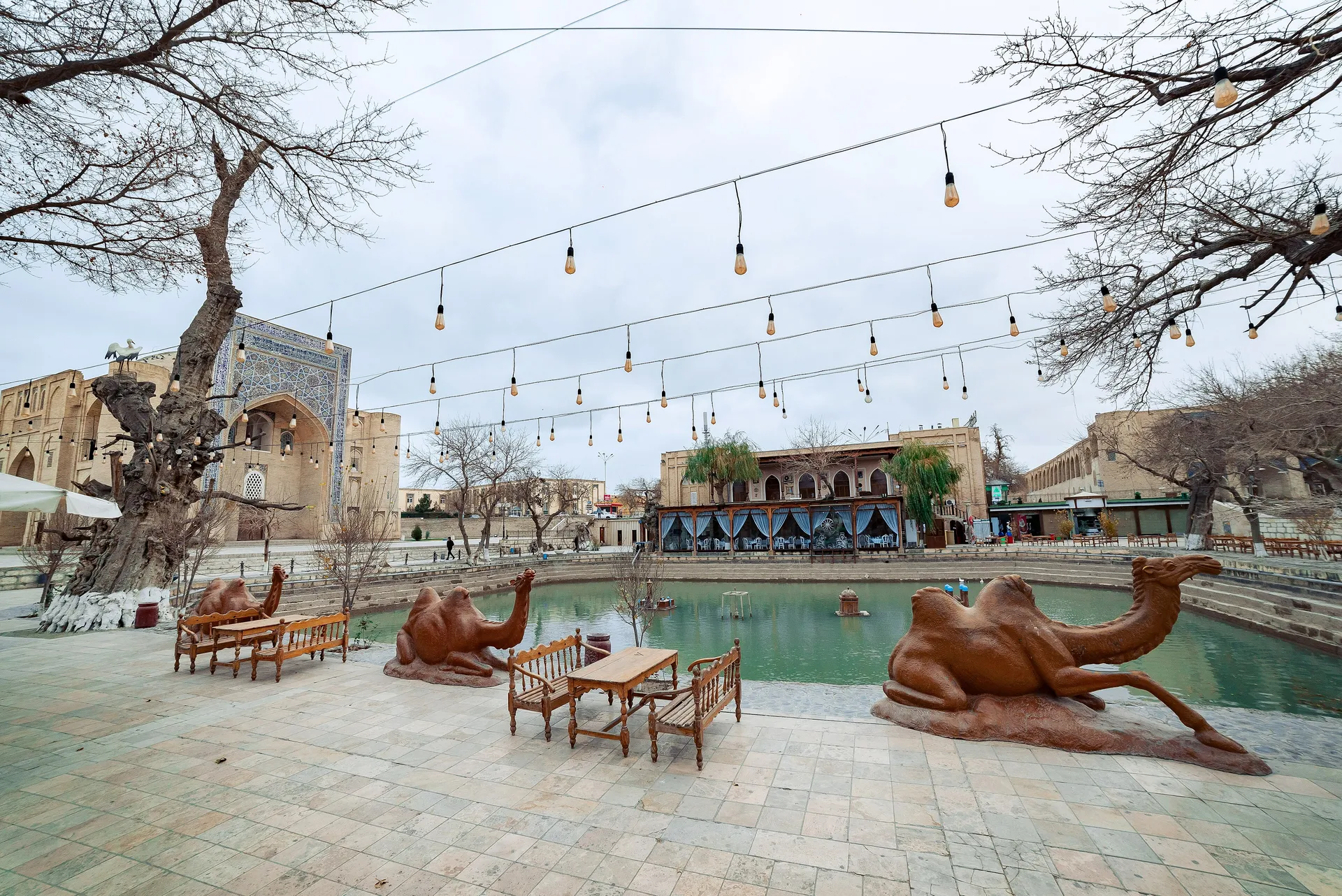
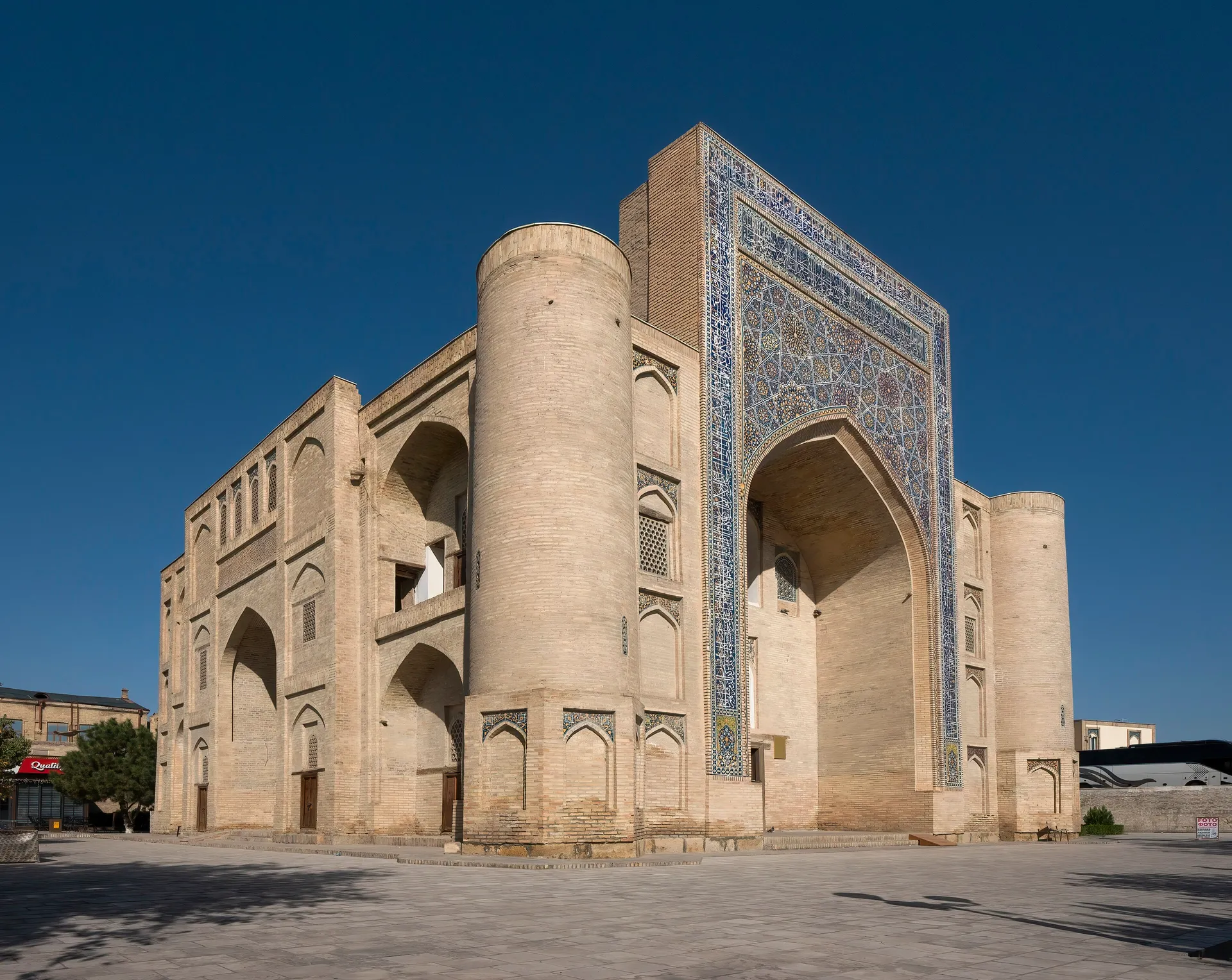
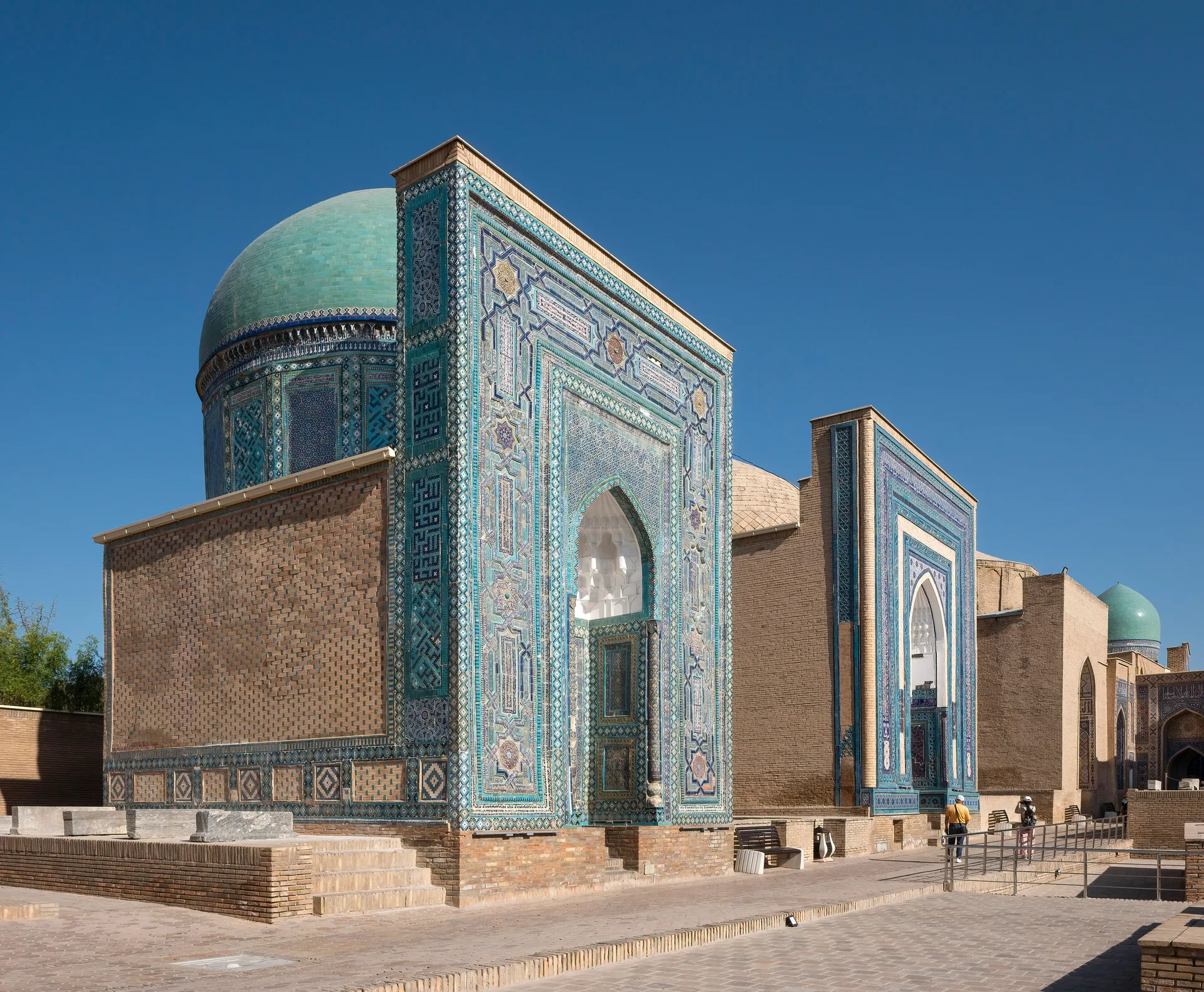
The architecture of Uzbekistan combines ancient traditional design with inventive answers to a harsh climate. Its great centres are Samarkand, Bukhara, Khiva, Shakhrisabz, Termez and Kokand, where palaces, mausoleums, mosques and minarets have stood for centuries. Colourful mosaics, religious inscriptions and abstract geometric patterns are its signature.
Three thousand years of building
Remains of Stone- and Bronze-Age settlements have been found in the Surkhandarya, Tashkent, Samarkand, Fergana and Navoiy regions. In the Middle Ages, as a central link of the Silk Road, the region's architecture flourished, and the Timurid period of the 14th–15th centuries and the Shaybanid era of the 16th made a lasting contribution to Islamic architecture as a whole. Today Uzbek architecture looks for a balance between that heritage and modern design.
The technique behind the colour
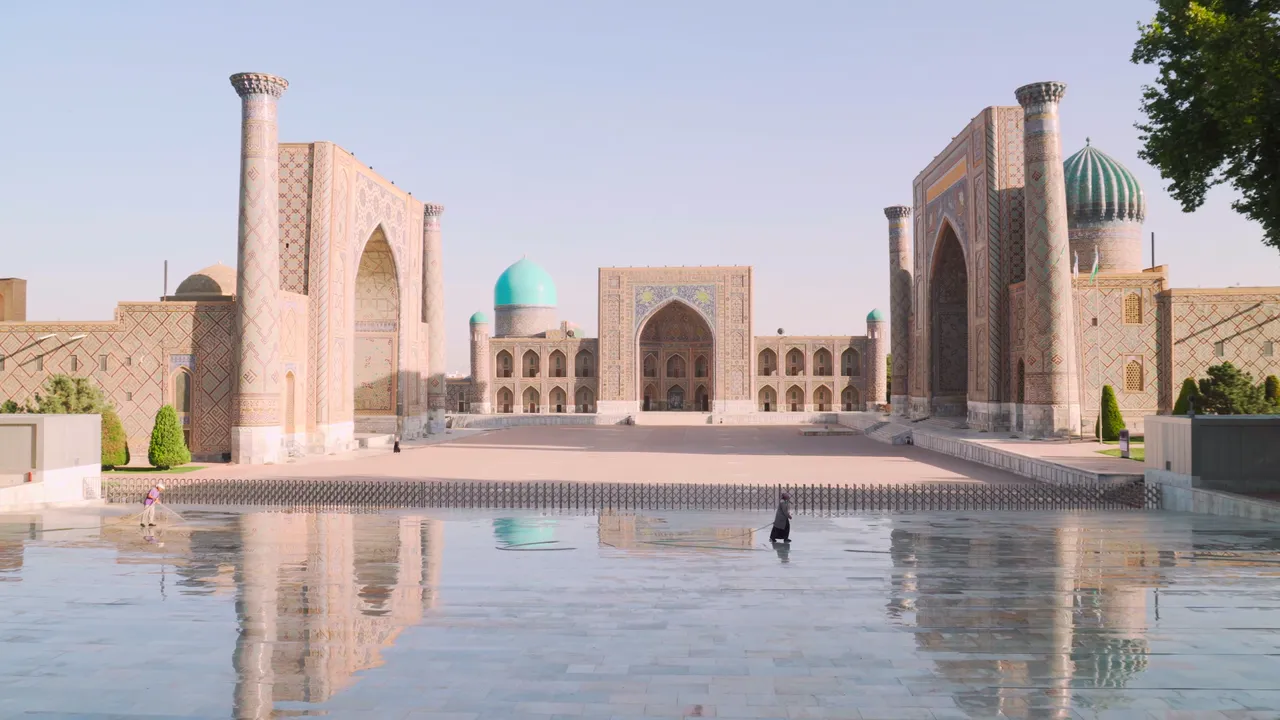
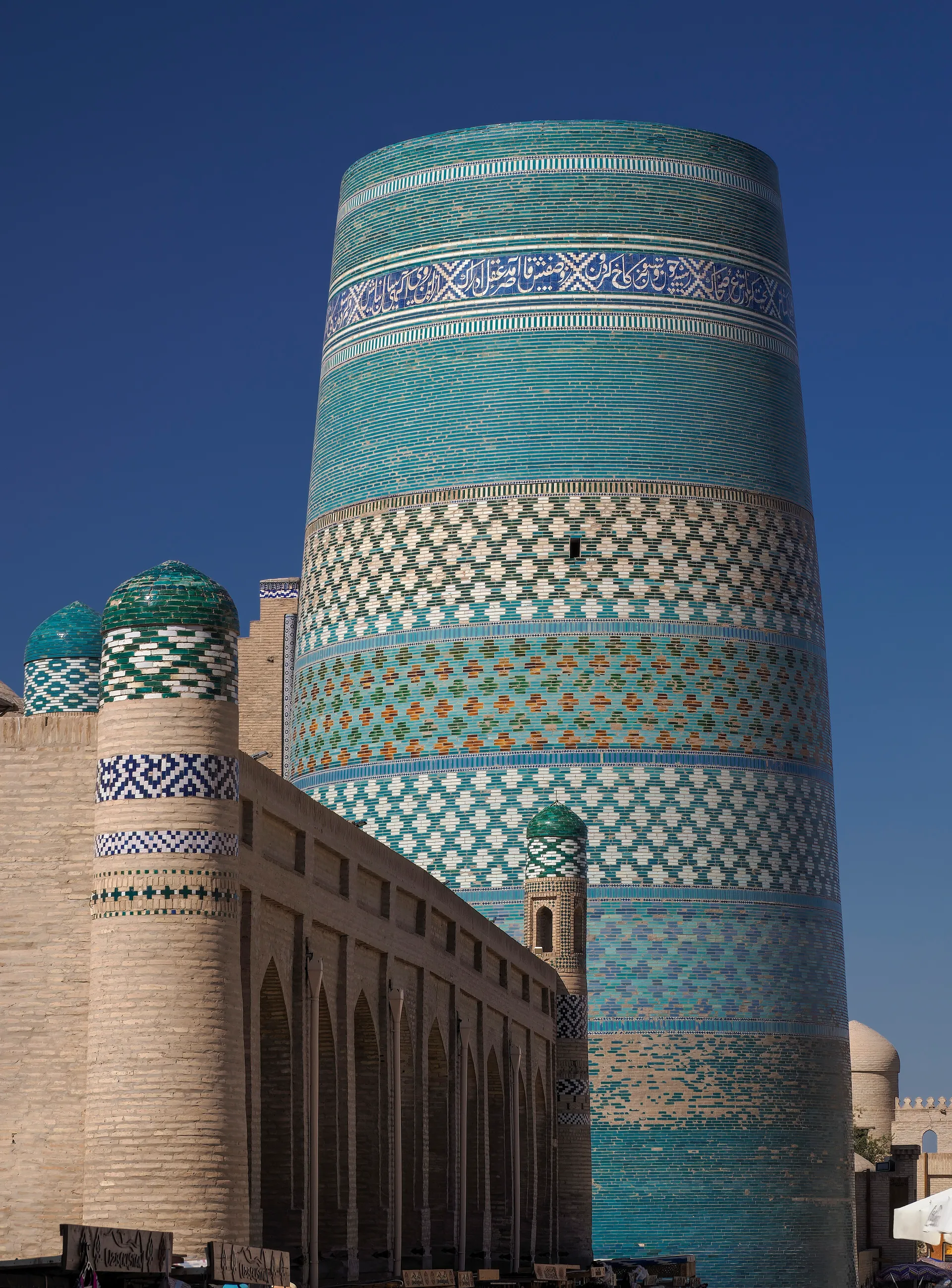
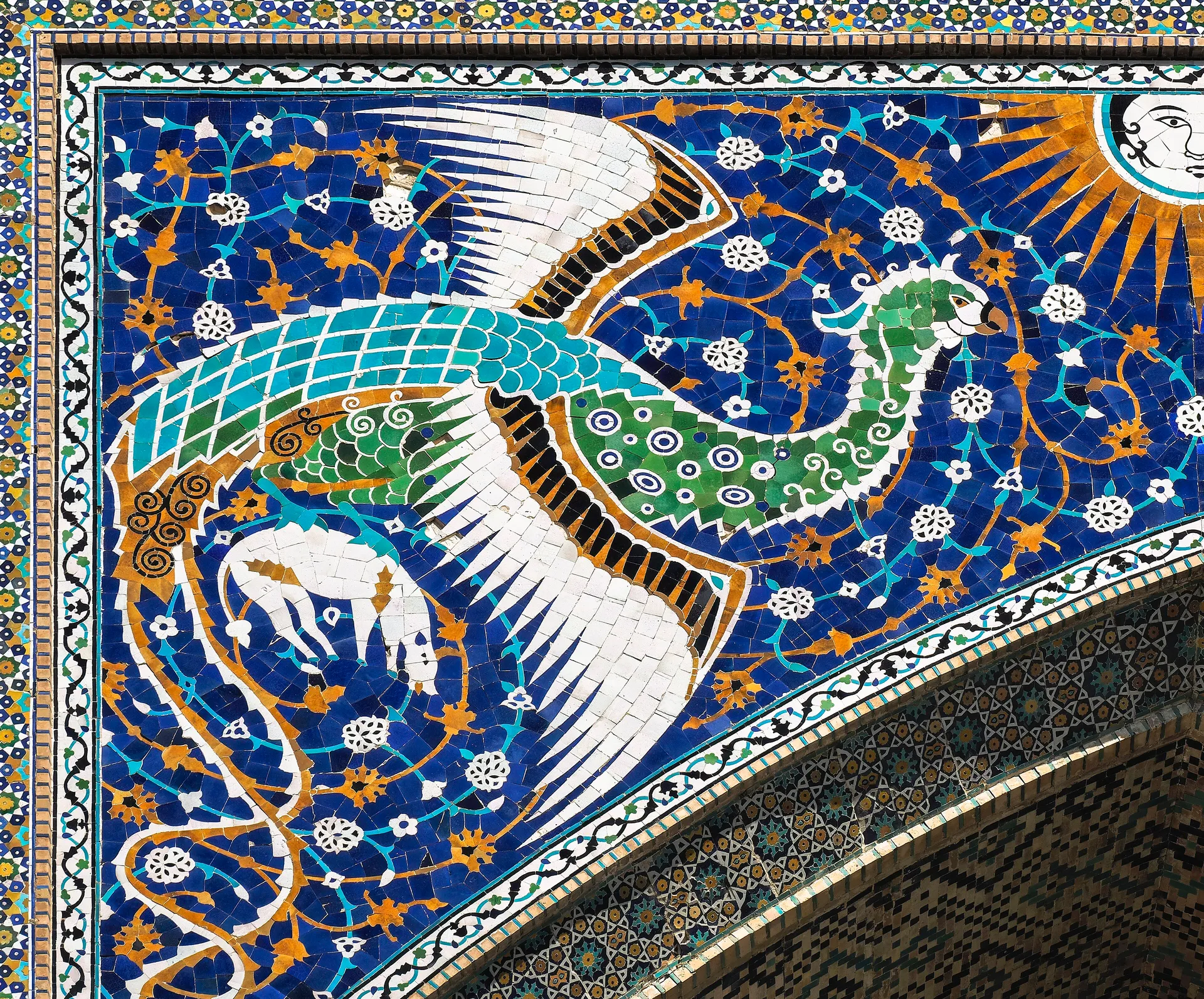
The blues come from cobalt and copper oxides fired into a tin glaze. Craftsmen used cut mosaic for the finest work — thousands of individually shaped pieces set into plaster — and cheaper painted majolica tiles for large fields. Inside, carved ganch plaster and muqarnas vaulting break light into honeycomb. The Registan in Samarkand shows three centuries of this at once: Ulugh Beg's madrasah (1417–20), the Sher-Dor with its famous tigers (1619–36), and the gold-ceilinged Tilya-Kori (1646–60).
Modern Tashkent
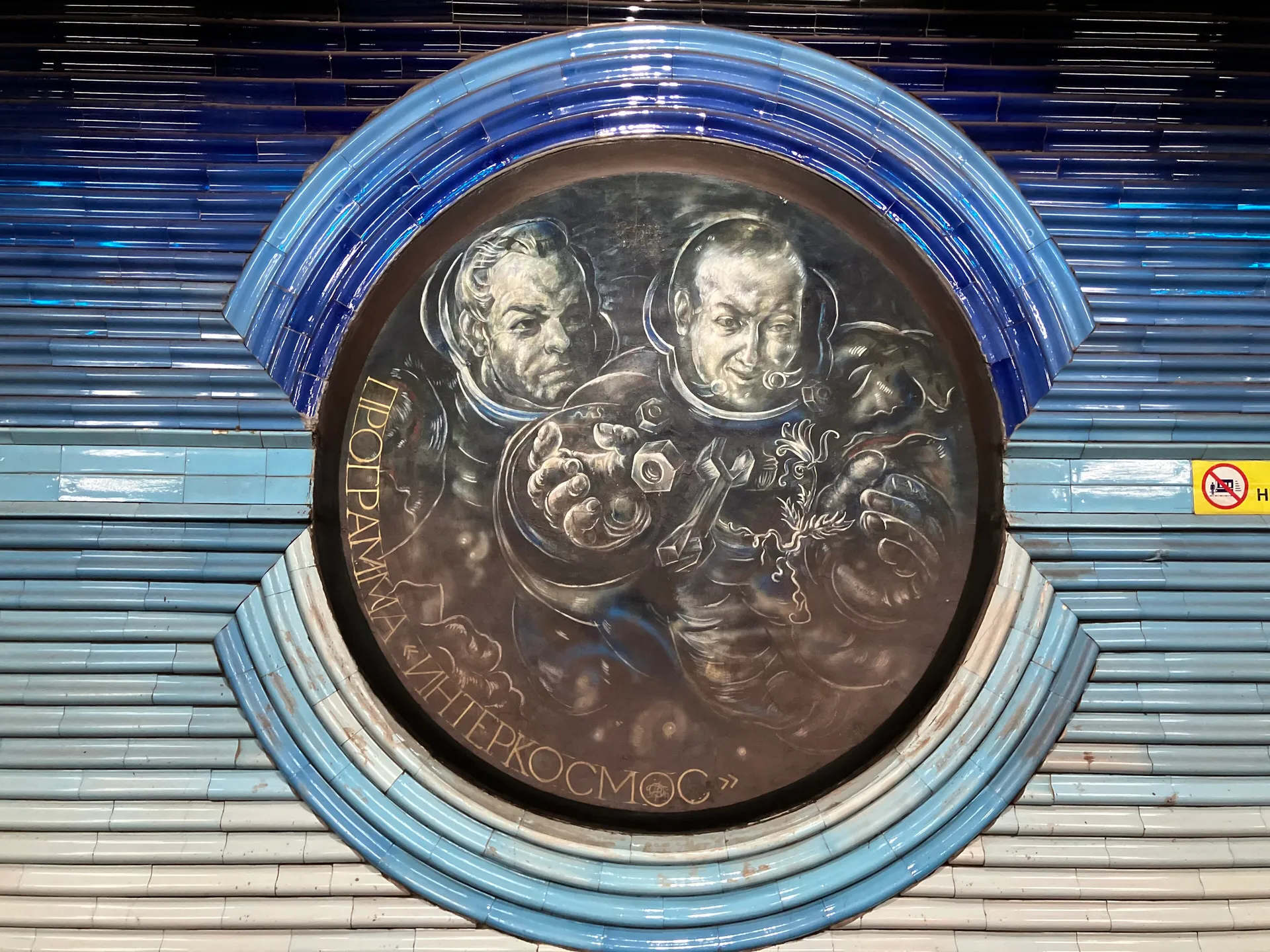
After the earthquake of 1966, Tashkent was rebuilt in a bold modernist style that borrowed from local tradition — sun screens patterned like ganch carving, domes, mosaics and courtyards. Ten of these buildings and ensembles, from the Chorsu Bazaar dome to the Kosmonavtlar metro station, were inscribed together on the UNESCO World Heritage List in 2026 as “Tashkent Modernism”.
Highlights
- Uzbekistan has seven UNESCO World Heritage sites, the first inscribed in 1990
- The Kalyan Minaret (1127) is said to be the one Bukhara structure Genghis Khan ordered spared
- Khiva's Kalta Minor was meant to be the tallest minaret in the Islamic world; it stopped at 29 metres
- Photographing the Tashkent metro was prohibited until 2018 — the stations doubled as civil defence shelters