
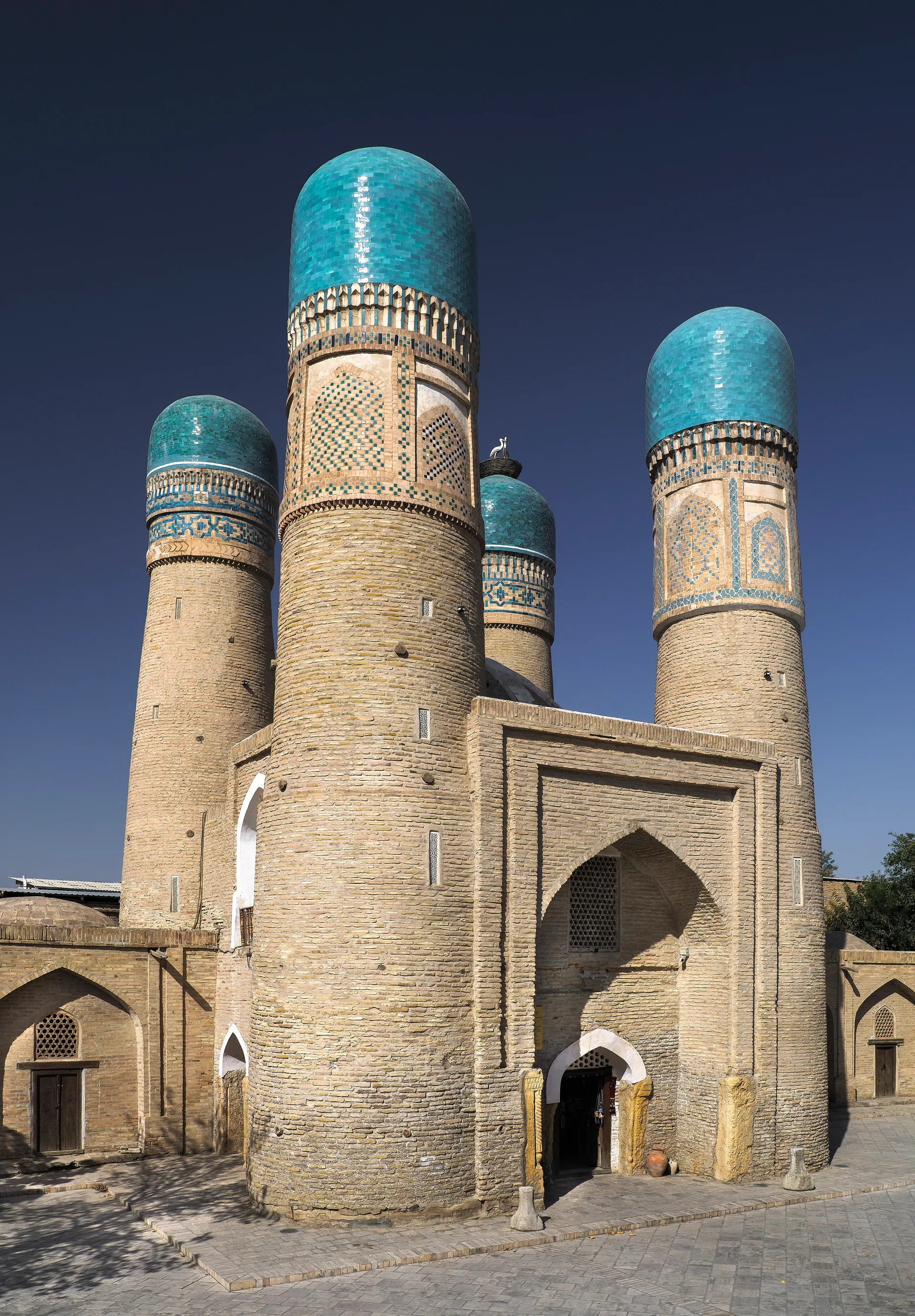
Timurid builders worked in baked brick — a material that is structurally excellent and visually plain. Everything that makes these buildings famous is the skin they wrapped around it.
Before Islam
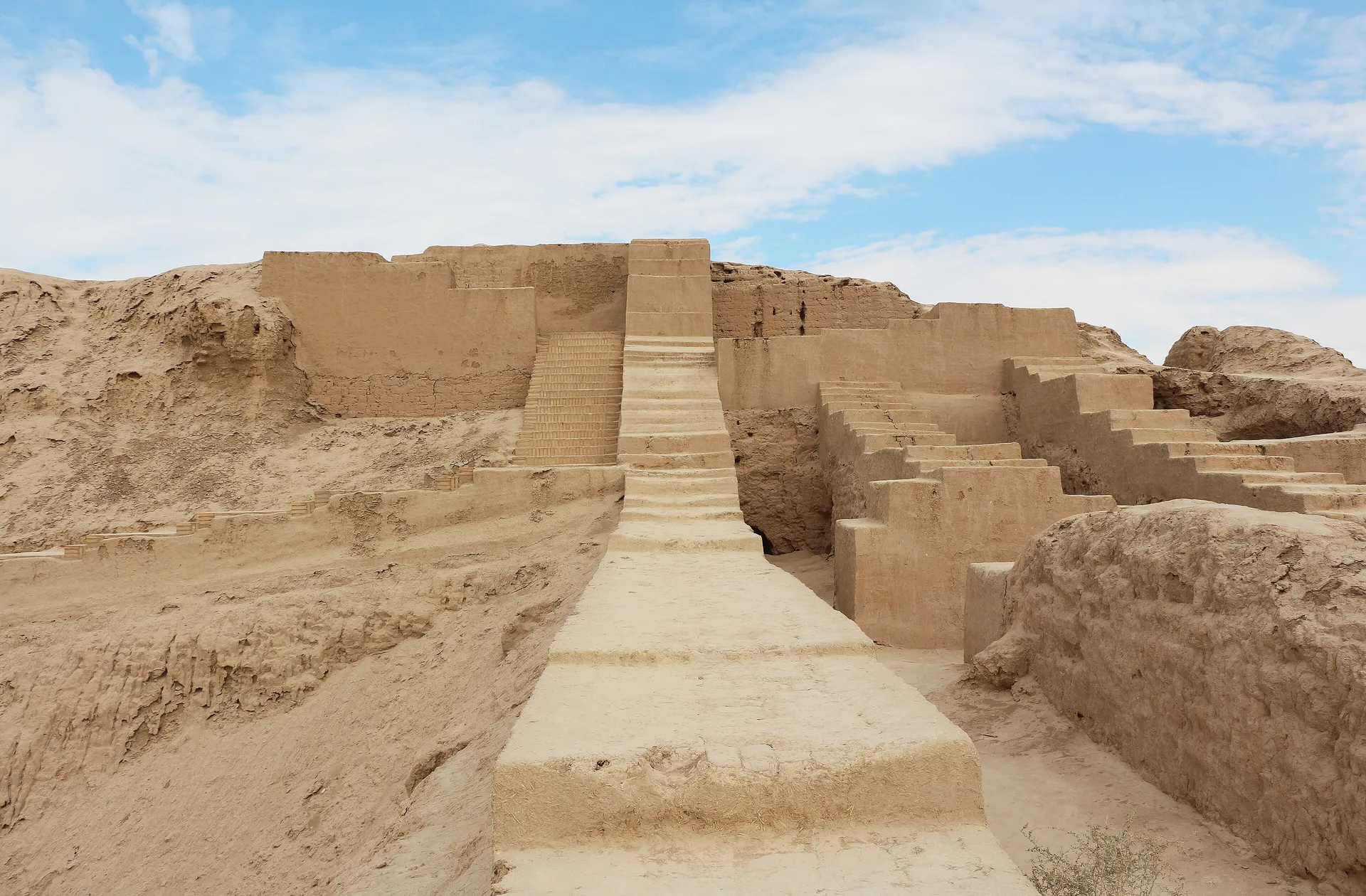
The earliest traces of human settlement here go back to the Palaeolithic. Among the oldest architecture are Sapallitepa and Jarkutan, Bronze Age settlements in Surkhandarya more than 3,500 years old, while the Buddhist monasteries of Fayaz Tepe and Kara Tepe near Termez date from the first centuries AD. Each marks a different stage of Central Asian civilisation.
In Khorezm, the desert fortresses of Ayaz Kala and Toprak Kala show how monumental mud-brick building had become long before the arrival of Islam.
Islamic architecture
Bukhara, Samarkand and Khiva shaped the architecture of the Islamic Middle Ages across the region. Rulers' palaces, aristocratic residences, bazaars, madrasas and mausoleums from this period are counted among its finest works.
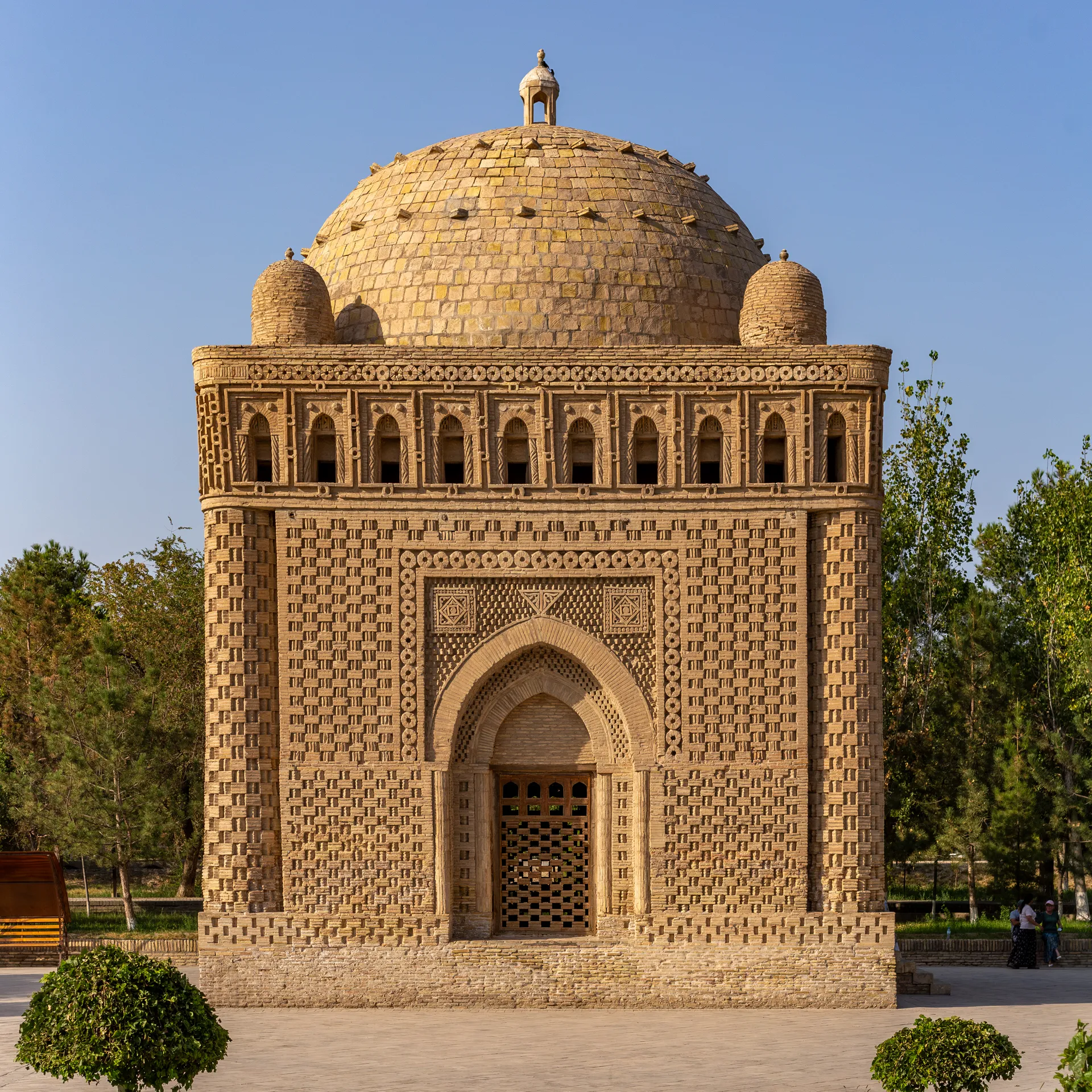
The Kyrk-Kyz (“Forty Girls”) manor near Termez, from the 9th–10th centuries, is a rare surviving example of an early country house, and the Samanid Mausoleum in Bukhara, built around 900, still stands as a masterpiece of early medieval brickwork.
The Registan
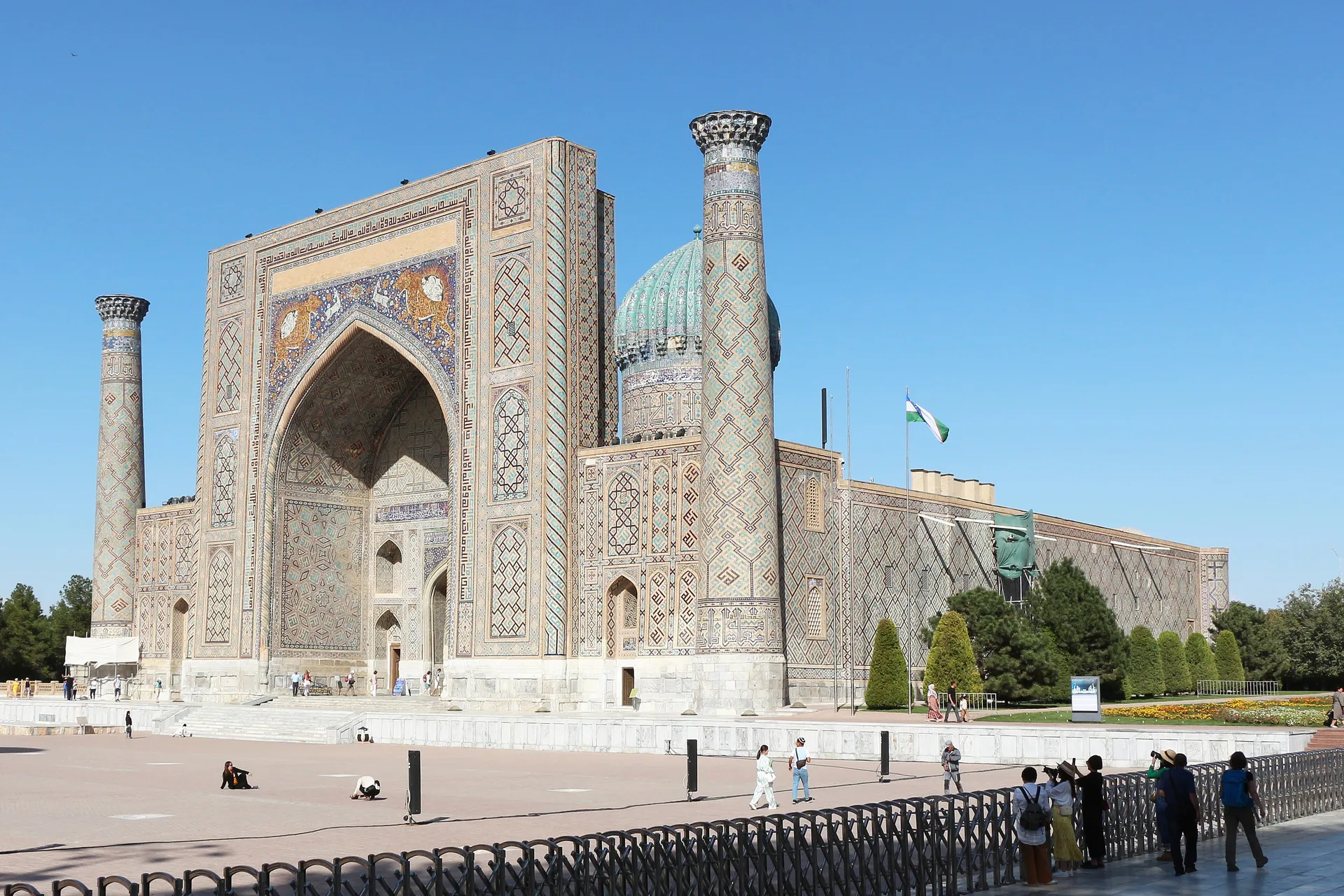
By the 11th and 12th centuries Samarkand was one of the major cities of the region. Its great public square, the Registan — which Lord Curzon called “the noblest public square in the world” — is still the heart of the old city. It is framed by three madrasas: Ulugbek (1417–1420), Sher-Dor (1619–1636) and Tilya-Kori (1646–1660).
The Ulugbek Madrasa was built by Timur's grandson, Mirzo Ulugbek. Its great arched portal (pishtaq) is covered with mosaic panels of stylised geometric ornament, with tall minarets at the corners; inside were a mosque and lecture rooms for students.
The Sher-Dor and Tilya-Kori madrasas were built in the 17th century on the orders of Yalangtoʻsh Bahodir, the Uzbek ruler of Samarkand. Sher-Dor's portal shows tigers chasing deer beneath a sun with a human face — a rare figurative image on a religious building, and a symbol of power. Tilya-Kori (“gilded”) is the last and largest building on the square: its long façade closes the ensemble, corner towers anchor it, and its mosque is covered inside with gold.
The Bibi-Khanym Mosque
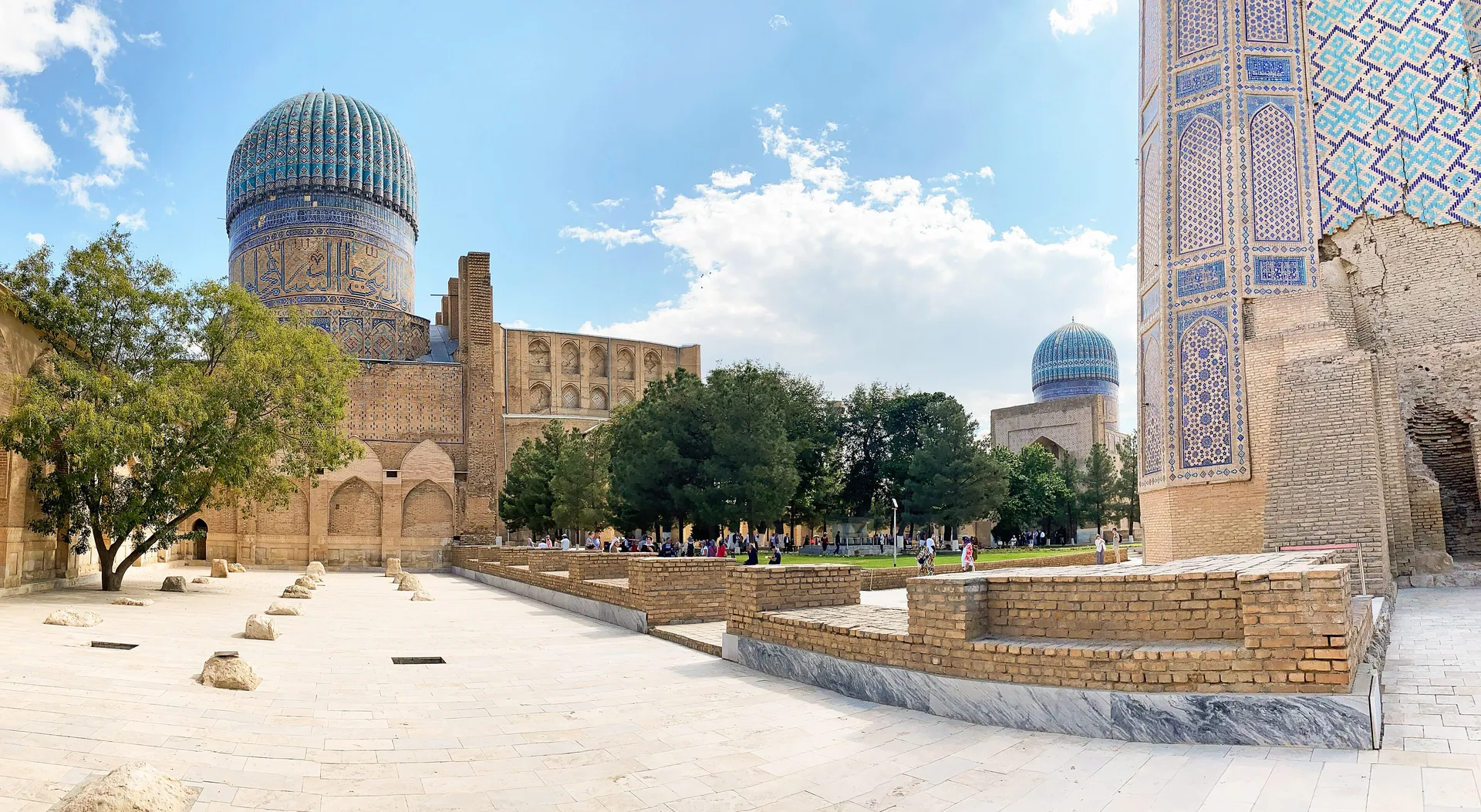
One of the greatest monuments of Uzbek architecture is the Bibi-Khanym Mosque, which Timur began after his Indian campaign of 1399. Its main portal rises about 35 metres and its minarets about 50, and its galleries were once covered by some 400 small domes around a vast courtyard. Its gates were said to be cast from an alloy of seven metals, and its walls of marble and brick were decorated with mosaics and blue-and-gold paintings.
The Timurid period (14th–15th centuries) and the Shaybanid era (16th century) are famous for such colourful designs — above all the ribbed turquoise domes, of which the dome of Gur-e Amir, Timur's mausoleum in Samarkand, is the best known.
Homes built for the climate
At the end of the 19th and the beginning of the 20th century, residential architecture turned to the needs of ordinary townspeople. A house in Bukhara is often closed to the street, sheltered from noise and dust, with rooms arranged to stay cool in summer and warm in winter. In Khiva, high terraces (ayvon) open to the wind to cool the house. In the Fergana Valley houses have sliding walls and shutters, and are often decorated with niches, ganch (carved alabaster) and carved wood. Simple as it is, this architecture is rational and unmistakably Uzbek.
Those same instincts — lasting design, original structures and a careful use of the microclimate — are what make the great ensembles so remarkable: Hazrati Imam in Tashkent, the Registan in Samarkand, Lyabi-hauz in Bukhara and Ichan Kala in Khiva.
Tashkent modernism
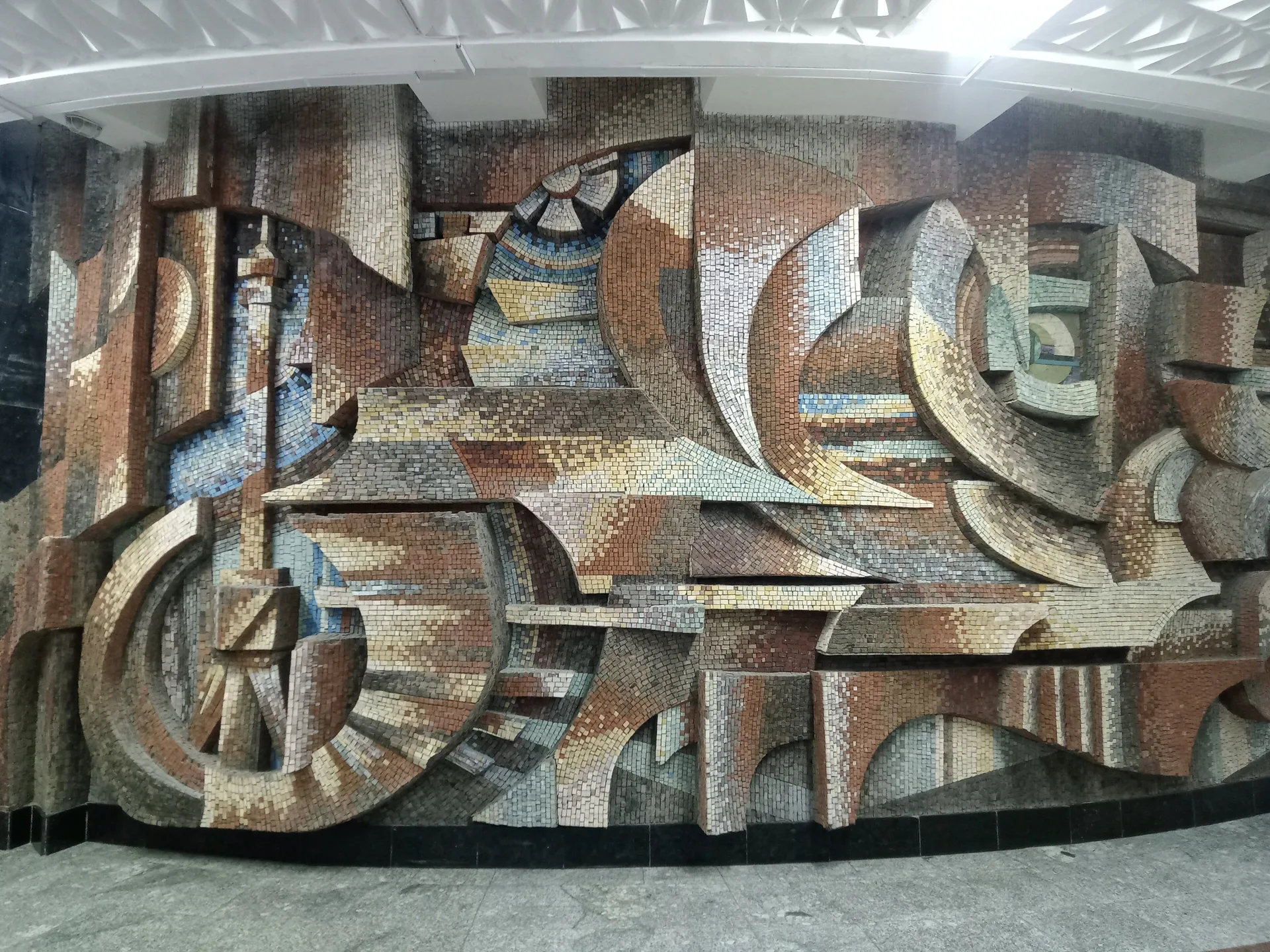
Ten modernist buildings and urban ensembles built in and around Tashkent between the 1960s and the 1990s were inscribed together on the UNESCO World Heritage List in 2026 as “Tashkent Modernist Architecture: Modernity and Tradition in Central Asia”:
- the Palace of Friendship of Peoples
- the Big Solar Furnace
- Chorsu Bazaar
- the State Museum of History of Uzbekistan
- Kosmonavtlar metro station
- the State Museum of Arts of Uzbekistan
- the Alisher Navoi Cinema Palace
- the State Circus
- the Zhemchug (“Pearl”) residential building
- the Central Exhibition Hall of the Academy of Arts
Four cities, four characters
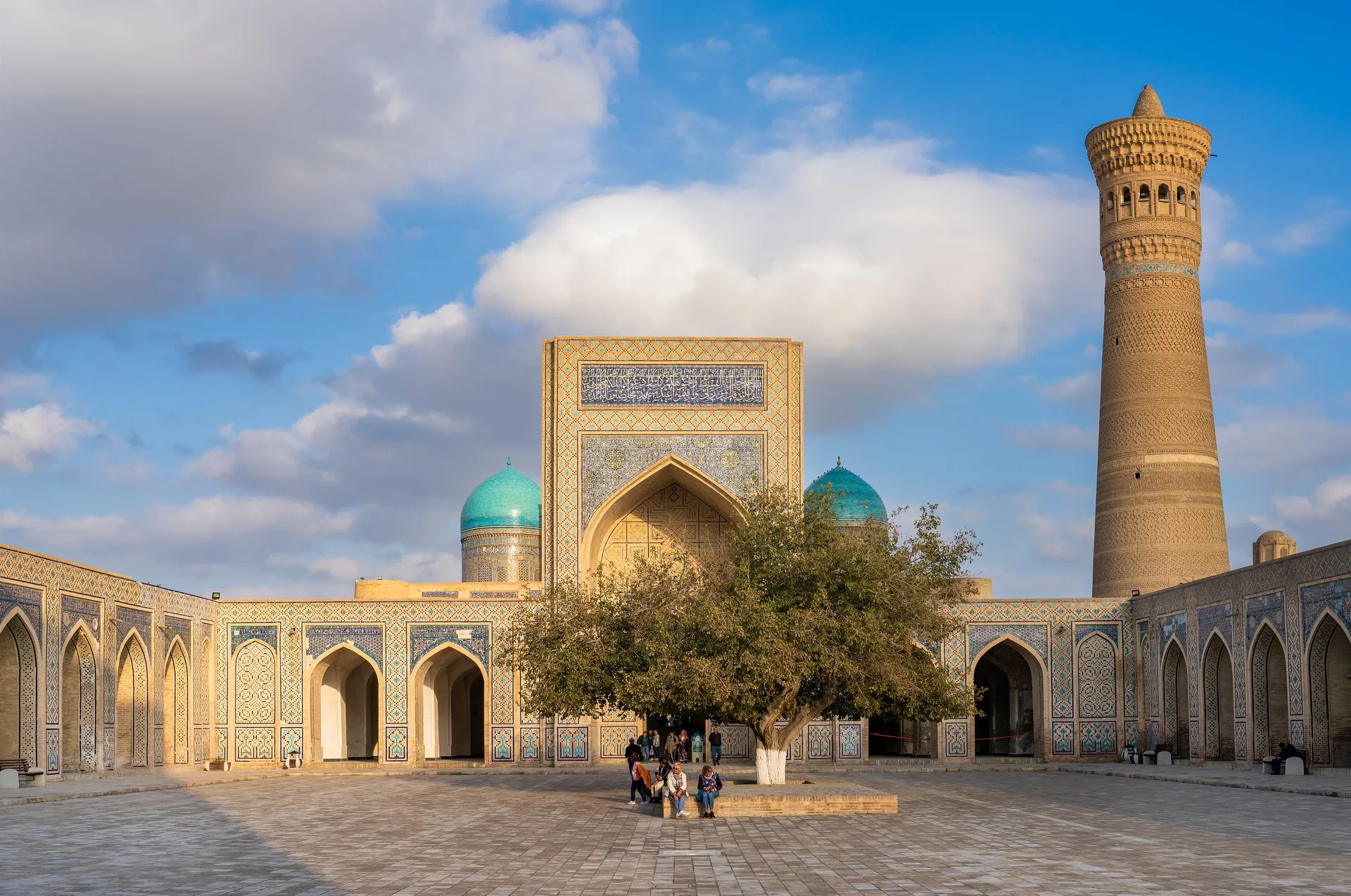
Samarkand is monumental and outward-facing. Bukhara is denser and older — the Kalyan Minaret has stood since 1127, and the Samanid Mausoleum from around 900 survived the Mongols only because sand had buried it. Khiva's Itchan Kala is a walled inner town you can walk end to end in twenty minutes; it became Uzbekistan's first UNESCO site in 1990. Tashkent is the outlier: levelled by an earthquake in 1966 and rebuilt as a showcase of Soviet modernism, with a metro whose stations were designed as underground halls.
Tashkent
Uzbekistan's capital and largest city is usually the first place visitors arrive. Tashkent combines historic sites with contemporary design: broad boulevards, Soviet-era buildings and Islamic architecture.
- Amir Temur Square — the central square, with its equestrian statue of Amir Temur
- The Hazrati Imam (Khast Imam) complex — the spiritual centre of the city, where the Uthman Quran, one of the oldest surviving Qurans, is kept
- Chorsu Bazaar — a historic market under a great blue dome, and the best place to taste the city
Samarkand
One of the oldest cities in Central Asia and for centuries a hub of the Silk Road, often called the “crossroads of cultures”.
- Registan Square — three tiled madrasas around one of the finest squares in the world
- Shah-i-Zinda — an avenue of tiled mausoleums climbing a hillside
- The Bibi-Khanym Mosque — once one of the largest mosques in the Islamic world
Bukhara
A treasure house of medieval architecture, with well over a hundred protected monuments in its old town.
- The Ark — the fortress from which Bukhara was ruled for more than a thousand years
- Po-i-Kalyan — the Kalyan Minaret, the Kalyan Mosque and the Mir-i-Arab Madrasa
- Lyabi-hauz — a pool shaded by old mulberry trees and framed by a madrasa and a khanqah
Khiva
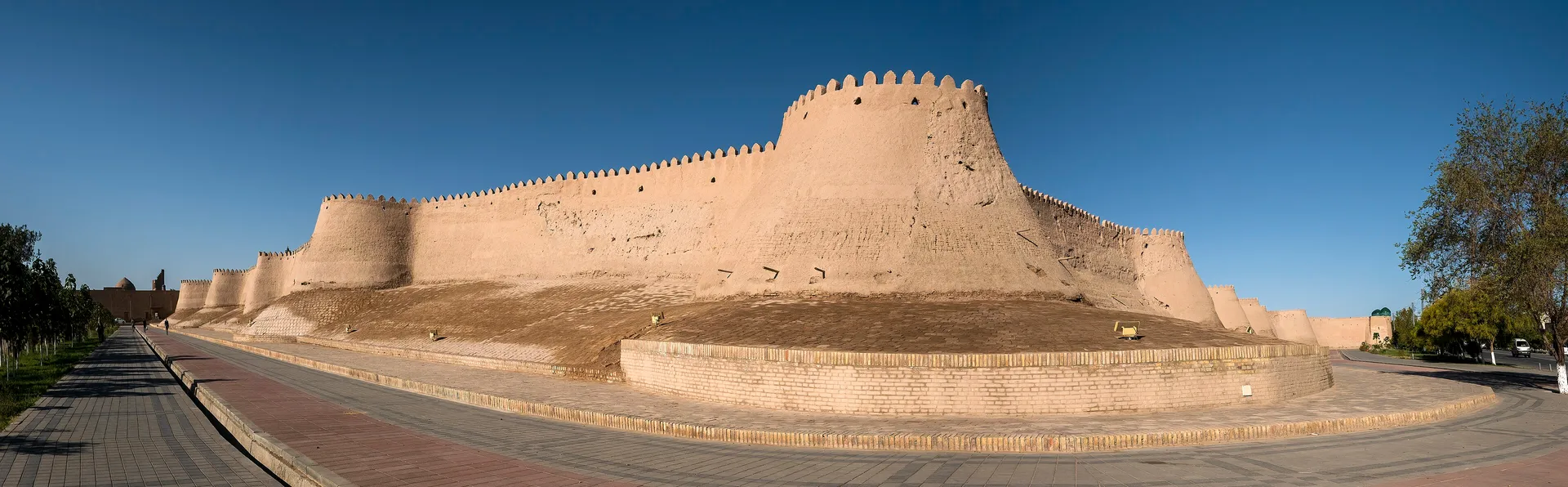
A UNESCO World Heritage site often called an open-air museum, for its intact city walls and dense old town.
- Ichan Kala — the walled inner city of madrasas, mosques and palaces
- Kalta Minor — the unfinished, tile-covered minaret that became Khiva's symbol
- Kuhna Ark — the old citadel of the khans, with views over the city
Shakhrisabz
The birthplace of Amir Temur — a small town with enormous monuments.
- Ak-Saray — the ruins of Timur's summer palace, whose portal was among the tallest ever built
- Dorut Tilovat — a religious complex with the tombs of Timur's family
- Dorus-Saodat — the memorial complex Timur built for his sons, including the crypt he prepared for himself
Nukus
The capital of Karakalpakstan, known above all for its art museum.
- The Savitsky Museum — the “Louvre of the desert”, with one of the world's largest collections of Russian avant-garde art, much of it once banned
- Mizdakhan — an ancient necropolis just outside the city
- The State Museum of Karakalpakstan — the history and culture of the Karakalpak people
Termez
Near the Afghan border: a former Silk Road crossing and a major centre of Buddhism.
- Kara Tepe and Fayaz Tepe — Buddhist monasteries of the first centuries AD
- Kyrk-Kyz — a mysterious square fortress-manor of the 9th–10th centuries
- The mausoleum of al-Hakim al-Tirmidhi — the shrine of one of the great Sufi teachers
Andijan
The largest city of the Fergana Valley, lively and deeply traditional.
Kokand
For long the political and cultural centre of the Fergana Valley and the capital of the Kokand Khanate.
- Khudoyar Khan's Palace — the lavishly tiled palace of the last khans
- The Jome Mosque — with a courtyard and a colonnade of carved wooden pillars
- The Norbutabiy Madrasa — one of the city's oldest madrasas