The story
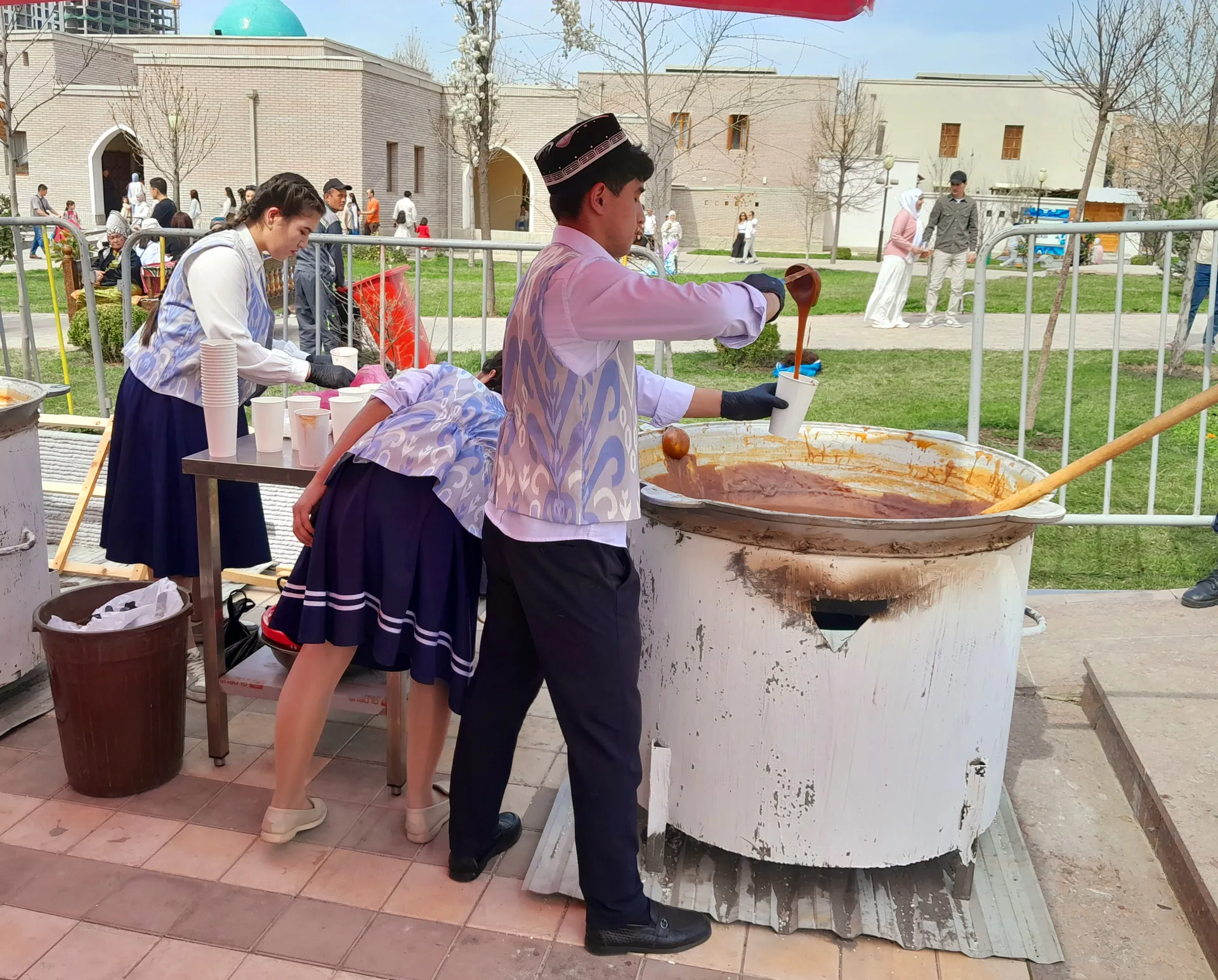
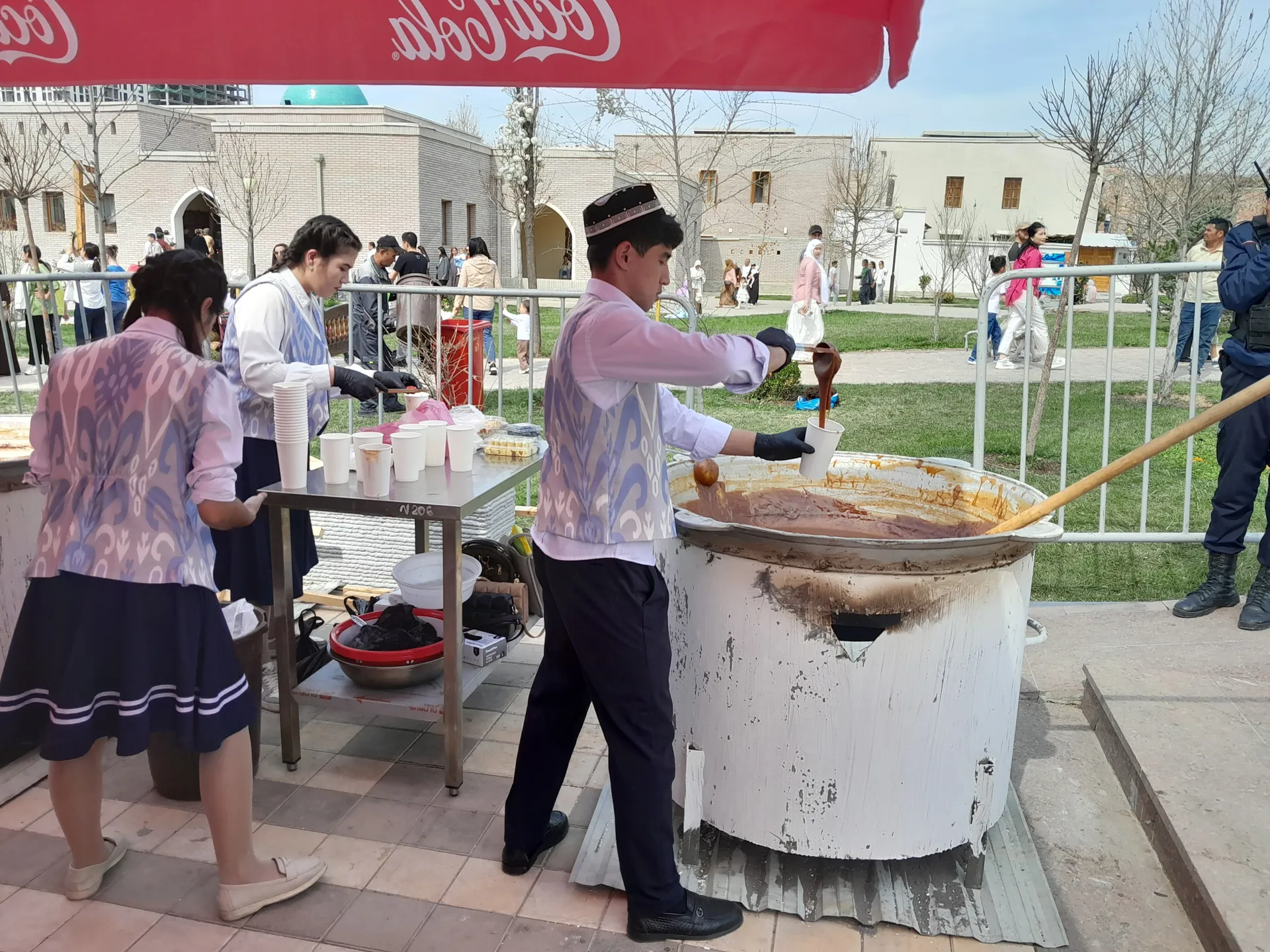
Sumalak is made once a year, for Navruz, the spring new year on 21 March. Women of the neighbourhood gather around a huge kazan and take turns stirring it through the whole night, singing and telling stories; everyone who stirs makes a wish.
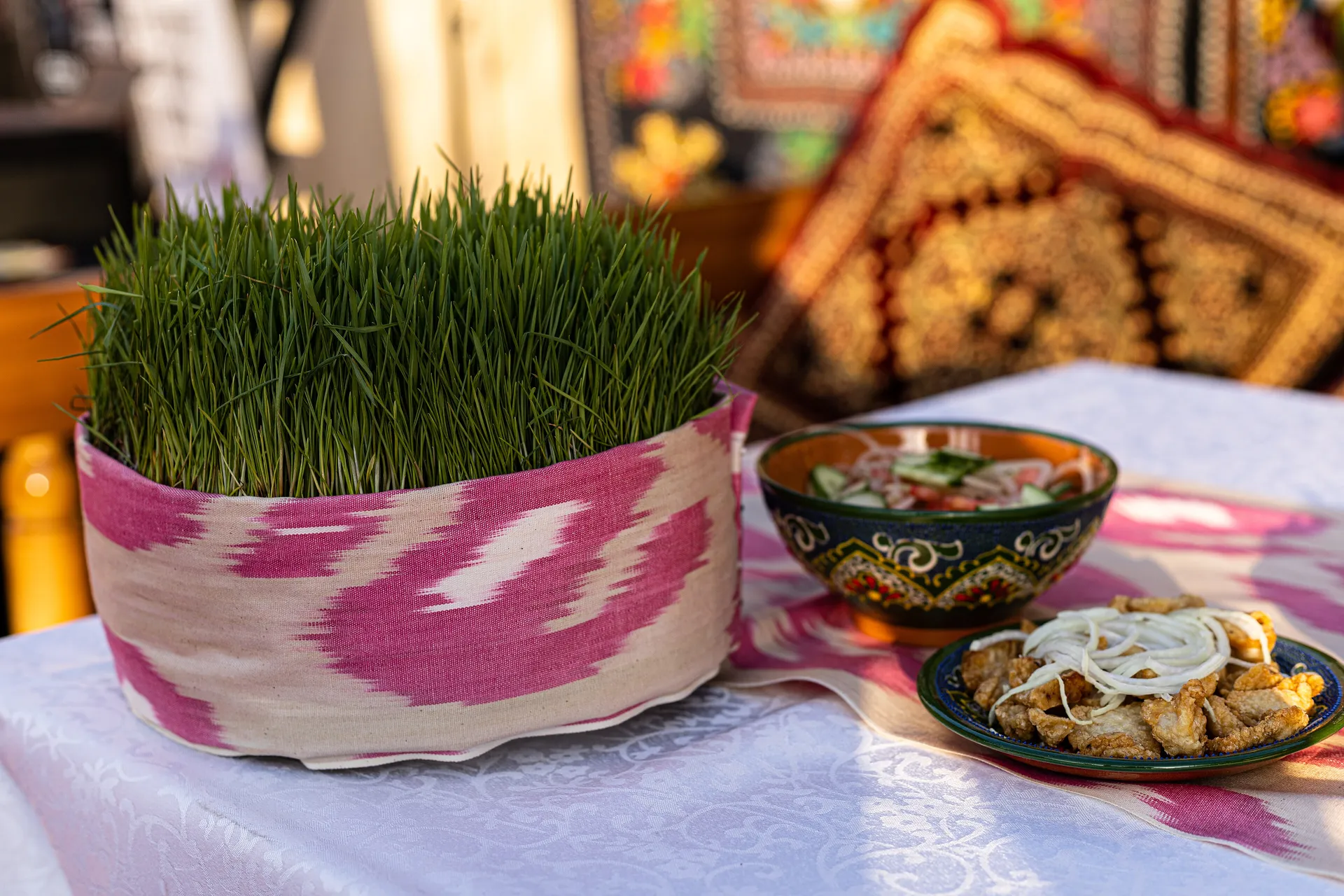
It starts days before, with wheat left to sprout. Clean pebbles or walnuts are put into the kazan so they roll along the bottom and keep the pudding from burning. When the lid is lifted at dawn, the pattern on the surface is read like an omen, and the sumalak is shared out to neighbours, relatives and friends. Navruz is on UNESCO's list of Intangible Cultural Heritage.
How it tastes
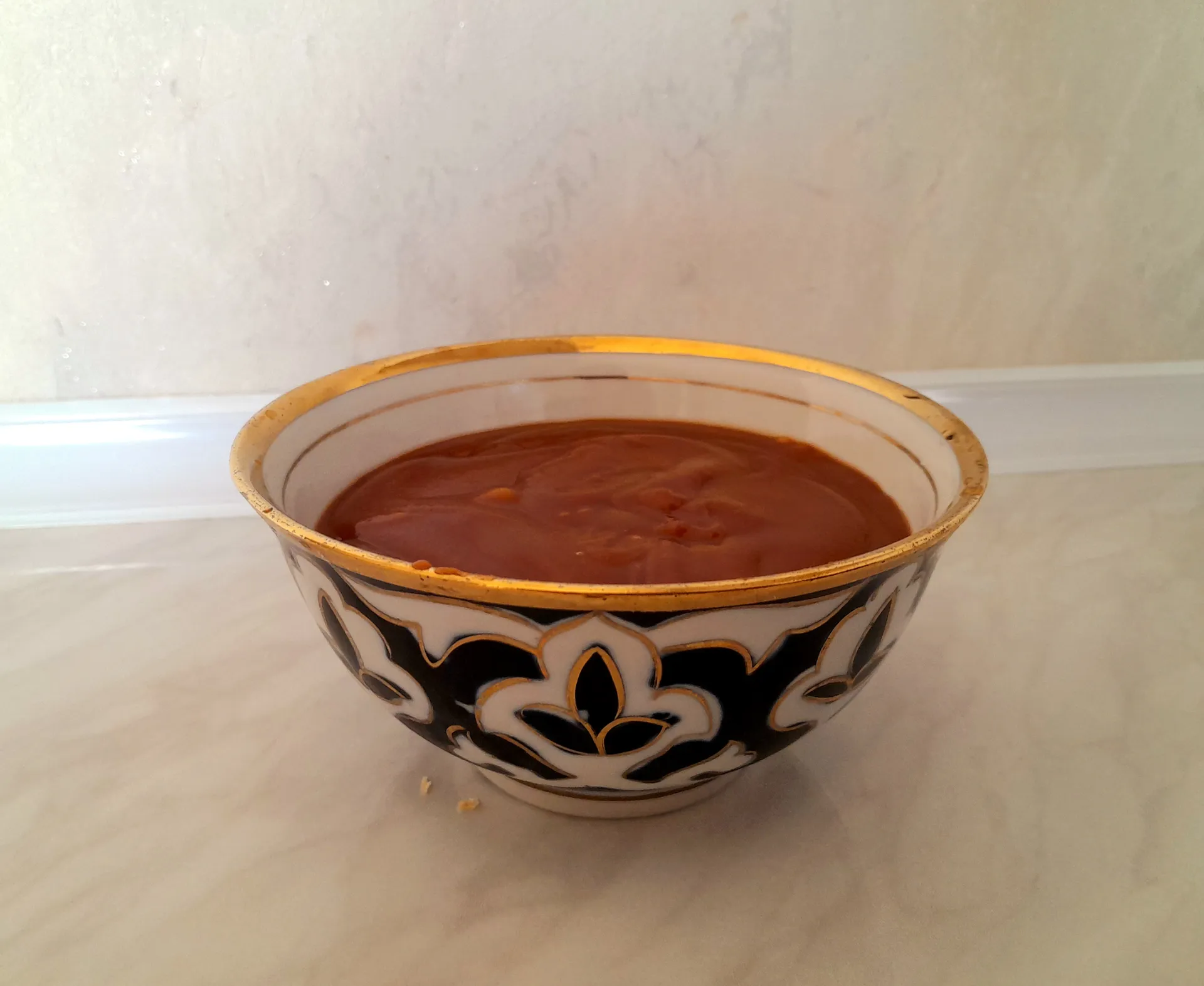
Thick, dark brown and sweet, though no sugar is added — the sweetness comes from the sprouted wheat, a little like malt or caramel, with a nutty depth.
Ingredients
Serves 30
For a small kazan:
- 1 kg wheat grains, for sprouting
- 1 kg flour
- 1 litre cottonseed or sunflower oil
- About 10 litres water
- 15–20 clean smooth pebbles or walnuts in their shells
Method
- Soak the wheat in water overnight, then spread it out, keep it damp and let it sprout for 3–4 days, until the shoots are 1–2 cm long.
- Grind or mince the sprouts, cover with water, then squeeze the milky juice out through a cloth. Repeat two or three times with fresh water.
- Heat the oil in a large kazan, add the flour and fry it lightly, then add the sprout juice little by little, stirring all the time.
- Add the washed pebbles.
- Cook over a low fire for 12–20 hours, stirring constantly from the bottom and adding the rest of the juice, until the sumalak is thick and brown.
- Cover and leave it to rest until morning, then serve it in bowls.