
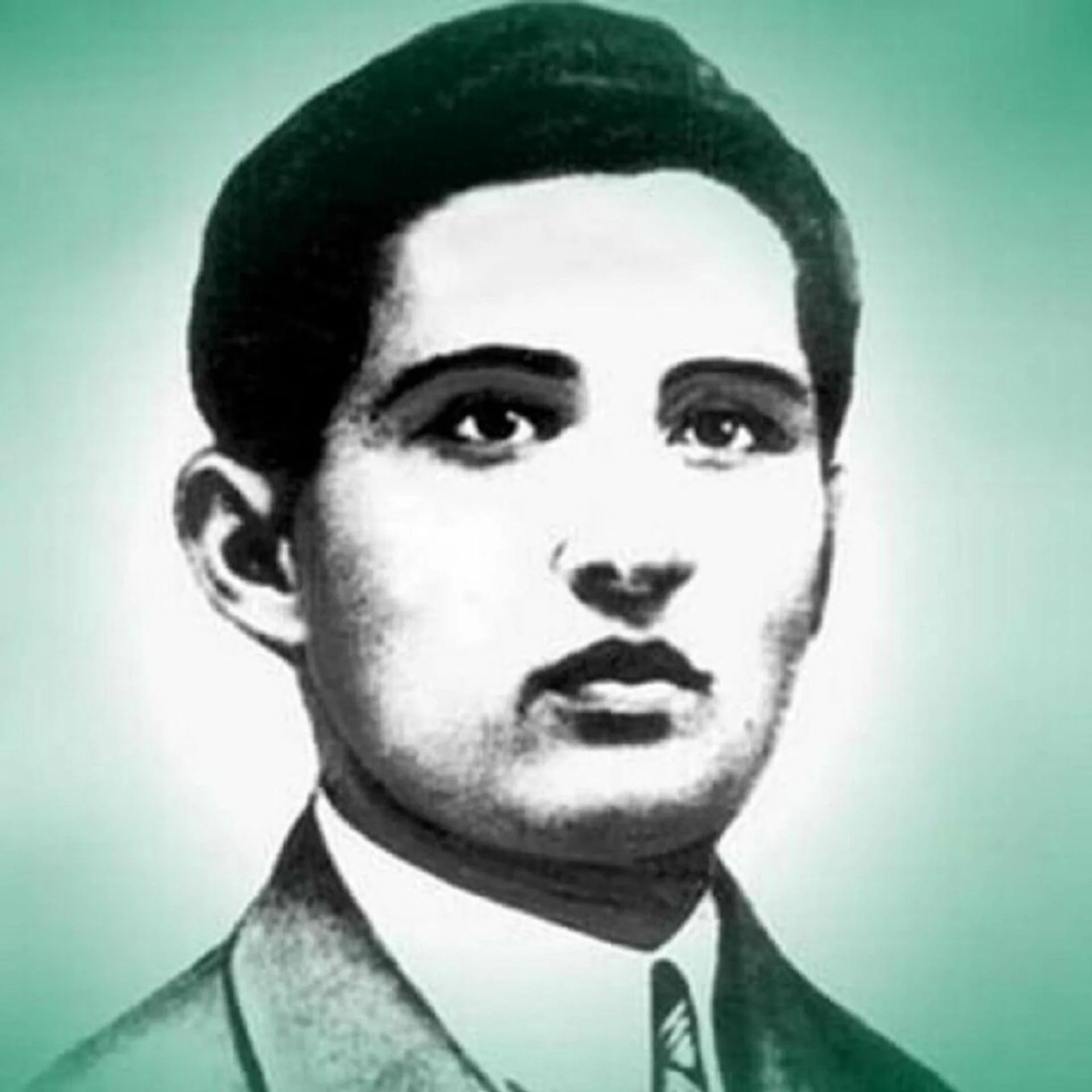
A gifted lyric poet and playwright, author of the collection Yurak ("Heart", 1935), and translator of Pushkin, Lermontov and Goethe into Uzbek. Arrested in 1937, he died in a labour camp in 1944.
An orphan from Namangan
Usmon Nosir was born in Namangan on 13 November 1912. Orphaned young, he grew up in a boarding school in Kokand, and in 1931 entered the philology faculty of the Uzbek State University in Samarkand. His first collections appeared the following year, when he was not yet twenty.
The heart of a poet
In barely five years he published Quyosh bilan suhbat ("Conversation with the Sun"), Safarbar satrlar, Traktorobod, Mehrim and Yurak ("Heart"), the epics Norbo'ta and Naxshon, and plays including Atlas. He was also a remarkable translator: for the centenary of Pushkin's death in 1937 he put The Fountain of Bakhchisaray into Uzbek, and he translated Lermontov's Demon and Goethe's tragedy Egmont.
Letters from the camps
In July 1937, at twenty-four, he was arrested as an "enemy of the people". He was held in camps at Zlatoust, Vladivostok and Magadan; in 1940 he wrote to Stalin asking for his case to be reviewed, without result. Moved to the Kemerovo region in 1943, he died on 9 March 1944 at Suslovo near Mariinsk, where a monument now stands. Uzbekistan marked his 110th anniversary in 2022.
Key achievements
- Published five collections of poetry by the age of twenty-three, including Yurak ("Heart", 1935)
- Translated Pushkin's The Fountain of Bakhchisaray (1937) and Lermontov's Demon into Uzbek
- Wrote the verse epic Naxshon and plays for the Uzbek stage