
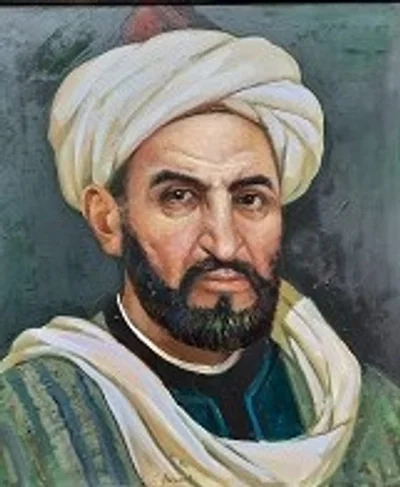
Compiled Divan Lughat at-Turk (1072–1074), the first comprehensive dictionary of the Turkic languages. It records words, proverbs and verse from across the Turkic world and includes one of the earliest maps of the region.
A prince turned scholar
Mahmud ibn Husayn al-Kashgari came from the Karakhanid ruling family and grew up around Kashgar. After upheaval in the dynasty he settled in Baghdad, where Seljuk Turks now held power and Arabic-speaking officials badly needed to understand Turkic. Before writing he had travelled for years among the Turkic tribes, collecting their words, songs and sayings.
A dictionary of a whole world
Written in Arabic between 1072 and 1074, the Divan Lughat at-Turk explains some 7,500 Turkic words with grammar notes, dialect comparisons, proverbs and fragments of verse — for much early Turkic oral literature, the only record we have. It also contains a round map of the known world with the Turkic lands at its centre, one of the oldest maps of its kind.
Found in an Istanbul bookshop
The dictionary was nearly lost. A single manuscript, copied in 1266, surfaced in an Istanbul bookshop early in the twentieth century; published in 1915–1917, it transformed the study of Turkic languages. Tradition holds that Mahmud returned home and is buried at Opal, near Kashgar. UNESCO marked the thousandth anniversary of his birth in 2008.
Key achievements
- Wrote Divan Lughat at-Turk (1072–1074), the first comprehensive dictionary of the Turkic languages
- Drew one of the earliest known maps of the Turkic world
- Recorded proverbs, verse and dialect differences that survive nowhere else