
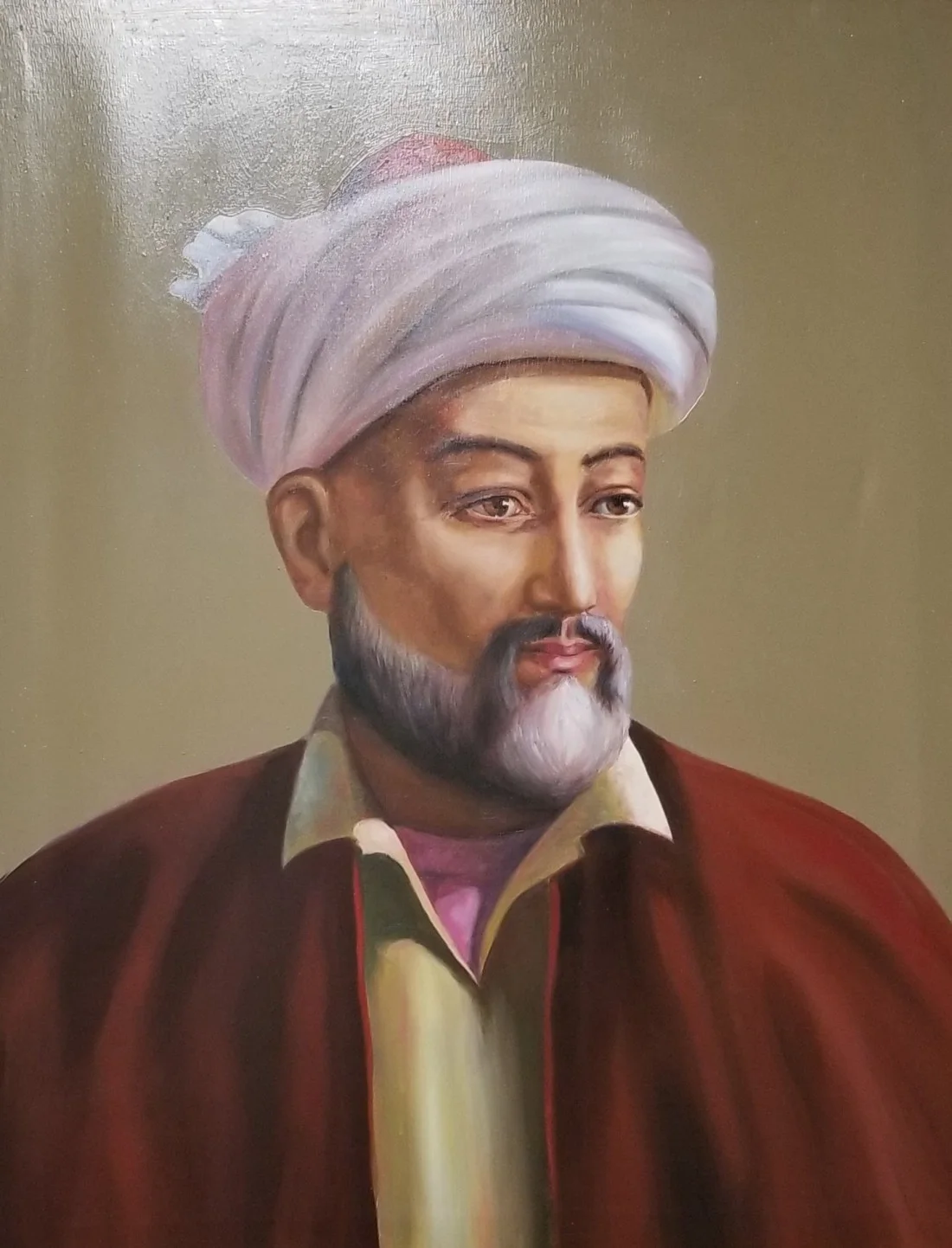
A minister at the Timurid court in Herat who wrote in Chagatai Turkic when the prestige language was Persian — and then argued the case for doing so in a book of its own.
Friends from childhood
Nizam al-Din Alisher, who wrote as Navoiy, was born in Herat in 1441 into a family of Timurid officials. As a boy he shared his schooling with the future Sultan Husayn Bayqara, and the friendship lasted their lives. Unsettled times sent him to study in Mashhad and Samarkand; when Husayn Bayqara took Herat in 1469, he called Navoiy home to serve him.
Five poems in Turkic
Navoiy also wrote in Persian, as Foniy, but he set out to prove what Turkic could do. Between 1483 and 1485 he wrote his Khamsa — five long poems answering the Persian classics of Nizami and Amir Khusraw — and later arranged four divans of lyric poetry by the stages of life. In Muhokamat al-lughatayn (1499) he argued that Turkic was at least the equal of Persian in richness and subtlety.
Vizier and builder
He served as keeper of the seal and vizier, and spent much of his fortune on public works: the Ikhlasiya madrasa and khanaka in Herat and hundreds of mosques, bridges, caravanserais and hospitals across the realm. He never married, and died in Herat in 1501. Uzbekistan honours him as the founder of Uzbek literature; the national library, the opera and ballet theatre and a whole region bear his name.
Key achievements
- Wrote the Khamsa, five long poems answering the Persian classics
- Wrote Muhokamat al-Lughatayn, arguing Turkic equalled Persian as a literary language
- Funded mosques, madrasahs, bridges and hospitals across the Timurid realm