
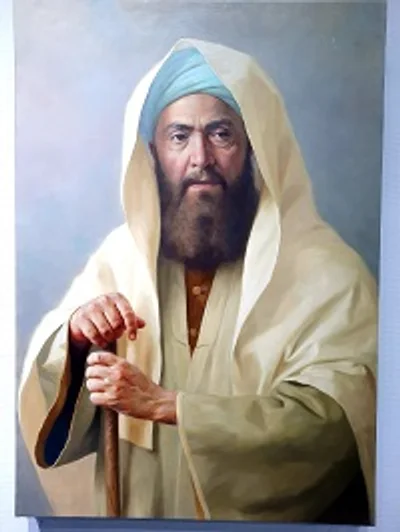
Samarkand theologian who founded the Maturidi school of Sunni doctrine, which weighs revelation together with reason. It is still followed across Central Asia, Turkey and South Asia.
Samarkand's theologian
Abu Mansur Muhammad al-Maturidi was born in Maturid, a quarter of Samarkand, in the second half of the ninth century and spent his life there, teaching among the city's Hanafi scholars. Samanid Samarkand was a meeting place of Muslim, Christian, Manichaean and Zoroastrian ideas, so theology there had to answer real opponents, not imaginary ones.
Reason and revelation
In his Book of God's Oneness, al-Maturidi argued that the human mind can know that God exists and that good and evil are real even before revelation — revelation completes what reason begins. This position, between strict literalists and the rationalist Mu'tazilites, became the Maturidi school, which alongside the Ash'ari school forms the mainstream of Sunni theology.
A school that travelled
Carried west by Hanafi scholars, Maturidi theology became the official creed of the Ottoman Empire and is followed today across Turkey, Central Asia, the Balkans and South Asia. Al-Maturidi died in 944 and was buried in the Chokardiza cemetery in Samarkand, where a memorial complex now honours him.
Key achievements
- Founded the Maturidi school, one of the two mainstream traditions of Sunni theology
- Wrote Kitab al-Tawhid, a systematic defence of belief through reason
- Wrote Ta'wilat al-Qur'an, one of the earliest large Qur'an commentaries from Central Asia