
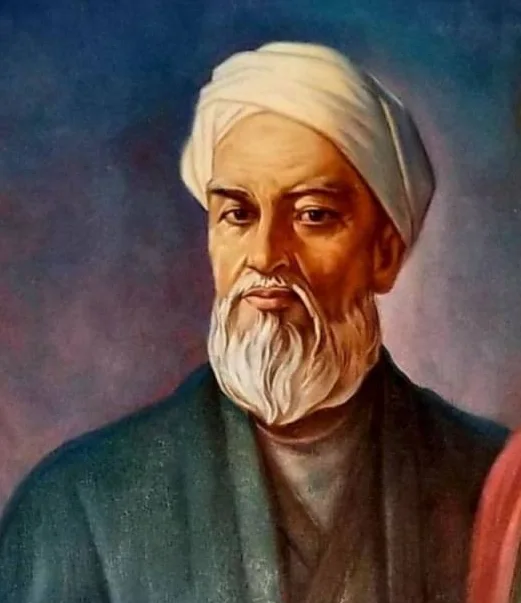
One of the last great classical Persian poets, author of the seven-part Haft Awrang. In Herat he was a close friend and mentor of Alisher Navoiy.
From Jam to Herat
Nur al-Din Abd al-Rahman was born in 1414 in Jam, in Khorasan — the town whose name he took as a poet. He studied in Herat and in Samarkand, where he impressed the scholars of Ulugh Beg's circle, and joined the Naqshbandi order, which shaped both his life and his verse. He settled in Herat, capital of the Timurid Sultan Husayn Bayqara, and lived there until his death.
Seven thrones
His Haft Awrang — "The Seven Thrones", named after the seven stars of the Great Bear — gathers seven long poems, among them Yusuf and Zulaykha and Layla and Majnun. He also wrote the Baharistan, a book of prose and verse in the manner of Sa'di's Gulistan, and Nafahat al-uns, the lives of more than six hundred Sufis, still a key source on the history of the mystics.
Friend and teacher of Navoiy
In Herat he formed a lifelong friendship with Alisher Navoiy, who called him his teacher and devoted a whole book to him, Khamsat al-mutahayyirin. The two exchanged poems and debated literature — one writing in Persian, the other in Turkic, each admiring the other's language. Jami died in Herat in 1492, and Navoiy mourned him in an elegy.
Key achievements
- Wrote the Haft Awrang, seven long poems including Yusuf and Zulaykha
- Wrote the Baharistan, a book of prose and verse modelled on Sa'di's Gulistan
- Compiled Nafahat al-uns, the lives of more than six hundred Sufis