
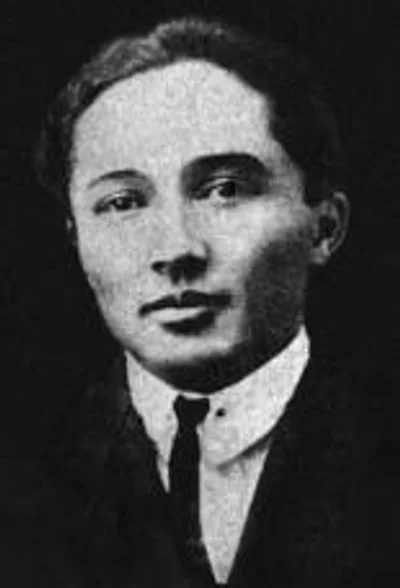
Born Mahmud Hodiyev, he was a poet, journalist and, from 1928, deputy people's commissar of education of Uzbekistan. Arrested in 1930, he died in 1938, a victim of the repressions.
From Tashkent to Moscow
Mahmud Hodiyev, who wrote as Botu, was born in Tashkent on 15 May 1904. He attended a Russian-native school and teacher-training courses, fell under the influence of the jadid educator Munavvar Qori, and in the 1920s studied economics at Moscow State University — one of a generation of young Uzbeks sent to learn the modern world and bring it home.
Sparks of hope
His collections Umid uchqunlari ("Sparks of Hope", 1925) and To'lqin tovushlari ("Voices of the Waves", 1929) mixed lyric and civic verse, and he wrote prose and stories for children. He edited the Farg'ona newspaper and the journal Alanga, argued in the 1920s for replacing the Arabic script with a Latin one, and in 1928 became deputy people's commissar of education of Uzbekistan.
1930–1938
In 1930 he was arrested on false charges, and his writing career ended at twenty-six. He spent the following years in prison and exile, and died in Tashkent on 9 May 1938, one of the many young Uzbek writers destroyed by the repressions.
Key achievements
- Published the poetry collections Umid uchqunlari ("Sparks of Hope", 1925) and To'lqin tovushlari ("Voices of the Waves", 1929)
- Served as deputy people's commissar of education of Uzbekistan (1928–1930)
- Edited the Farg'ona newspaper and the journal Alanga