
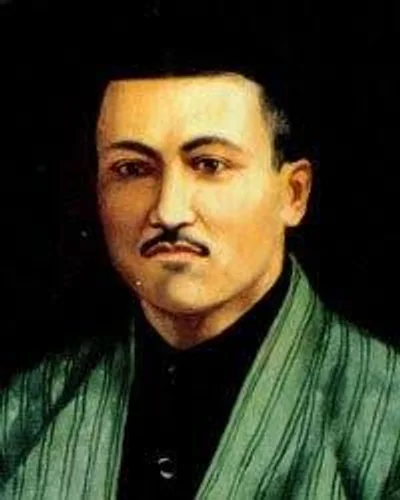
Abdulla Qodiriy was born in Tashkent in 1894. He studied in both traditional and Russian-native schools and worked as a clerk before turning fully to writing. He took a form that did not exist in Uzbek and made it work on the first attempt: O'tgan kunlar (Bygone Days), serialised from 1922, was the first full-length Uzbek novel, and Mehrobdan chayon followed. He also wrote a great deal of satire, much of it aimed at officials of exactly the kind the new state was producing. He was arrested in late 1937 and executed on 4 October 1938.
O'tgan kunlar — the first Uzbek novel
Serialised from 1922 and published complete in 1926, O'tgan kunlar (Bygone Days) was the first full-length novel written in Uzbek. It is a love story set in the khanates on the eve of the Russian conquest, and its power comes from refusing to romanticise them: the tragedy is driven by the ordinary machinery of the society itself — arranged marriage, factional intrigue, the helplessness of women within it. Qodiriy gave Uzbek prose psychological interiority and a plot that turned on character rather than fate, and readers recognised themselves in it immediately.
The satirist who could not be forgiven
Qodiriy also wrote Mehrobdan chayon (Scorpion from the Pulpit) and a great deal of satire, much of it aimed at officials and hypocrites of exactly the kind the new state was producing. Satire is remembered longer by its targets than by its readers. He was arrested at the end of 1937 and shot on 4 October 1938, alongside Cho'lpon and Fitrat. He was forty-four. O'tgan kunlar was banned, then restored, and is now read by every schoolchild in the country as the beginning of Uzbek prose.
Key achievements
- Wrote O'tkan kunlar (1925–26), the first Uzbek novel
- Wrote Mehrobdan chayon, a second major historical novel
- Executed in 1938 and formally rehabilitated after independence